
6th to 8th Grade - Gateway 2
Note on review tool versions
See the series overview page to confirm the review tool version used to create this report.
- Our current review tool version is 2.1. Learn more
- Reports conducted using earlier review tools (v1.0 and v1.5) contain valuable insights but may not fully align with our current instructional priorities. Read our guide to using earlier reports and review tools
Loading navigation...
Comprehension
Comprehension Through Texts, Questions, and Tasks| Score | |
|---|---|
| Gateway 2 - Partially Meets Expectations | 62% |
| Criterion 2.1: Text Quality and Text Complexity | 9 / 14 |
| Criterion 2.2: Knowledge Building Through Reading, Writing, and Language Comprehension | 26 / 42 |
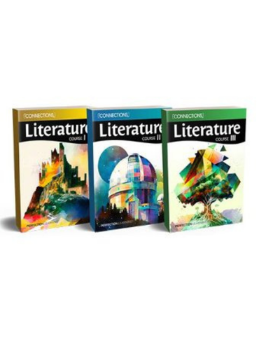
The Connections Literature materials partially meet expectations Gateway 2: Comprehension Through Texts, Questions, and Tasks. The program includes a coherent instructional design that integrates multiple literacy strands and provides engaging texts aligned to unit themes and essential questions. Students are consistently engaged in text-based questions, discussions, and writing tasks that support comprehension and evidence-based thinking, and the materials include a range of assessments and writing opportunities that integrate literacy skills. However, the text selection does not consistently meet expectations for complexity or balance, relying heavily on literary, short-form texts and limiting opportunities for sustained knowledge-building across disciplines. Additionally, scaffolds, vocabulary instruction, sentence-level work, and writing processes are present but uneven in explicitness, coherence, and alignment to student needs. Opportunities for cross-text analysis, extended research, and sustained academic discourse are also inconsistent. While assessments are frequent and varied, guidance for using data to inform instruction is minimal. Overall, the program offers a strong foundation with engaging texts, a coherent instructional structure, and meaningful, text-based learning opportunities, while also presenting opportunities to strengthen text balance and complexity, clarify and streamline instructional guidance, and more systematically support knowledge-building, differentiation, and data-informed teaching to fully meet Gateway 2 expectations.
Criterion 2.1: Text Quality and Text Complexity
Information on Multilingual Learner (MLL) Supports in This Criterion
For some indicators in this criterion, we also display evidence and scores for pair MLL indicators.
While MLL indicators are scored, these scores are reported separately from core content scores. MLL scores do not currently impact core content scores at any level—whether indicator, criterion, gateway, or series.
To view all MLL evidence and scores for this grade band or grade level, select the "Multilingual Learner Supports" view from the left navigation panel.
Materials include content-rich, engaging texts that meet the text complexity criteria for the grade level. Texts and text sets cohesively work together to build knowledge of specific topics and/or content themes.
The Connections Literature materials partially meet expectations for Criterion 2.1: Text Quality and Complexity. The program offers a substantial volume of engaging texts that are generally well-crafted, age-appropriate, and aligned to unit themes and essential questions, though the balance of informational and literary texts does not meet grade-level expectations and relies heavily on short-form works and excerpts rather than full-length texts. While the program provides general guidance for independent reading, it lacks clear systems for implementation and accountability. Text complexity information is thorough, including quantitative and qualitative measures, but some texts fall below grade-level expectations and are not always clearly connected to instructional goals. The materials include a variety of scaffolds to support comprehension before, during, and after reading, along with some differentiation guidance; however, these supports are not consistently targeted to specific student needs or aligned to text complexity. Units are organized around coherent, theme-based text sets that promote engagement and reflection, but the strong emphasis on literary, identity-centered topics limits opportunities for broader, knowledge-building across content areas. The program also incorporates a range of perspectives and varied voices, supported by contextual information for teachers, though representation is uneven and guidance for addressing sensitive topics could be more robust.
Indicator 2a
Materials provide opportunities for students to engage in a range and volume of reading through content-rich and engaging texts.
The text quality and volume of reading in Connections Literature materials meet expectations for indicator 2a. The program does not meet the grade-level balance of informational and literary texts required by standards across grades 6–8, with each grade including a higher proportion of literary texts than the 55/45 informational-to-literary ratio and consisting entirely of short-form texts rather than a mix of short- and long-form works. Across grades, the program includes a range of subgenres and a mix of full texts and excerpts, though no full-length texts are taught; excerpts are selected by the publisher to highlight specific skills. Despite these limitations, the texts are well-crafted, content-rich, age-appropriate, and aligned to unit themes and essential questions, featuring respected authors and engaging topics. The program provides high-level guidance and recommendations for independent reading, classroom libraries, and literature circles; however, the materials lack concrete structures such as schedules, monitoring systems, or accountability measures to support and track independent reading within the program.
Materials include core/anchor texts that are well-crafted, content-rich, and engaging for students at their grade level.
The Connections Literature curriculum for Grades 6-8 includes well-crafted, content-rich texts that provide a mix of literary and informational works across various subgenres. Literary texts include short stories, poetry, dramas, and novel excerpts, while informational texts encompass articles, memoirs, essays, and speeches. The program features works by widely respected authors and presents age-appropriate themes that engage students at each grade level. Texts are selected for their connections to each unit’s theme and essential question.
Grade 6 materials include texts on school, identity, human nature, friendship, and mischief, which will engage 6th-grade students.
Grade 7 materials include texts on identity, adversity, independence, role models, and technology, which will engage 7th-grade students.
Grade 8 materials include texts on adversity, community, agency in society, humor, and fantasy, which will engage 8th-grade students.
Throughout the materials, texts are content-rich, well-crafted, and worthy of student analysis.
In Grade 7, Unit 5, students read “There Will Come Soft Rains” by Ray Bradbury, which contains irony, descriptive imagery, personification, symbolism, and a variety of sentence structures.
Note: As part of this review, the publisher submitted documentation detailing text characteristics, including genre and subgenre classifications and counts of full texts, excerpts, long-form texts, and short-form texts. The information below is presented as contextual evidence only and is not factored into the overall score or rating.
Materials do not reflect the balance of informational and literary texts required by the grade-level standards (55/45 in 6-8), including various subgenres. Materials include a range of full texts and excerpts, depending on their stated purpose. The materials do not include both long and short form texts. (The information below is presented as contextual evidence only and is not factored into the overall score or rating.)
In Grade 6, materials reflect a balance of 26/74, informational to literary texts, which does not reflect the 55/45 balance required by the grade-level standards.
The materials include 54 core texts: 14 informational texts and 40 literary texts.
Texts include the following subgenres: poetry, short story, novel excerpt, article, memoir, and essay.
The materials include 45 full texts and 9 excerpts.
The materials include 54 short-form texts and zero long-form texts.
In Grade 7, materials reflect a balance of 46/54, informational to literary texts, which does not reflect the 55/45 balance required by the grade-level standards.
The materials include 41 core texts: 19 informational texts and 22 literary texts.
Texts include the following subgenres: poetry, short story, novel excerpt, essay, drama, speech and article.
The materials include 30 full texts and 11 excerpts.
The materials include 41 short-form texts and zero long-form texts.
In Grade 8, materials reflect a balance of 45/55, informational to literary texts, which does not reflect the 55/45 balance required by the grade-level standards.
The materials include 47 core texts: 21 informational texts and 26 literary texts.
Texts include the following subgenres: short story, novel excerpt, essay, memoir, article, speech, and drama.
The materials include 34 full texts and 13 excerpts.
The materials include 47 short-form texts and zero long-form texts.
The publisher provides a rationale for why each excerpt text was excerpted instead of taught in its entirety, stating, “Original text is too long; excerpt chosen to highlight the lesson's skills.”
Note: As part of this review, the publisher submitted documentation outlining text characteristics, including genre and subgenre designations and counts of full texts, excerpts, long-form texts, and short-form texts.
Materials do not include sufficient teacher guidance (including monitoring and feedback) and student accountability structures for independent reading (e.g., independent reading procedures, proposed schedule, tracking system for independent reading). (The information below is presented as contextual evidence only and is not factored into the overall score or rating.)
The To the Teacher section of the Teacher Edition's front matter includes a section titled "Using Novels in the Middle School Classroom." This section contains information about Independent Reading, Reading Instruction (including literature circles), Read-Aloud Novels, and the Benefits of Reading Aloud to Students. The Independent Reading section states,
“A classroom library supports students’ reading growth with independent reading selections to help them develop a deeper understanding of literary concepts, expand their vocabulary, and improve their reading comprehension skills. Students must read across a range of texts and volumes to achieve grade-level reading independence. A classroom library collection of diverse titles supports independent reading, which promotes reading growth. A varied collection also supports student choice, which is also important in independent reading.
When students read an excerpt from a novel or informational text, providing the complete text in the classroom library will promote independent reading. It’s no different than the interest that is piqued in all of us when we see trailers to promote upcoming movies or a new series. With an introduction to the rich, engaging text of a novel excerpted within their reading program, students will be motivated to ‘see’ the rest of the story.”
The section on Reading Instruction summarizes how literature circles work and provides high-level, step-by-step guidance on setting up and using them in the classroom. This section highlights the importance of whole-class novels and the high-level components of novel studies in the school, including before-reading, guided reading, small-group discussions, writing assignments, and culminating activities.
In each Unit Introduction, the program includes a list of texts that students can read to explore the unit theme and essential question further. This list includes novels that teachers can add to their classroom library. Guidance for this states, “Use the suggested titles below to extend the Unit theme and Essential Question and offer students voice and choice to build independent readers beyond the classroom…Add the suggested novels above to your classroom library for students to read independently or to discuss in literature circles to further explore the Unit Theme. In addition, consider adding the excerpted novels from this unit to your classroom library as well.”
While the materials include high-level information on independent reading and literature circles, as well as unit-related novel suggestions for each unit, there is no proposed schedule, guidance on how to integrate these into the school day within the program's context. Additionally, the materials do not include accountability, feedback, or monitoring structures.
Indicator 2b
Core/Anchor texts have the appropriate level of complexity for the grade according to documented quantitative analysis, qualitative analysis, and relationship to their associated student task.
The text complexity analysis in the Connections Literature materials partially meets expectations for indicator 2b. The program provides quantitative and qualitative text complexity information for core texts through Unit Introduction charts and Lesson Planner documents in the Interactive Edition. These resources include Lexile levels, word counts, genres, and qualitative ratings for meaning/purpose, text structure, language features, and knowledge demands, along with a rationale for each text’s inclusion. While this information supports understanding of text complexity and placement, the rationales emphasize quantitative and qualitative measures and student interest more than explicit connections to unit learning goals. Overall, many texts fall within an appropriate complexity range for the grade band and are paired with grade-appropriate tasks; however, a significant number of texts across grades—particularly in Grade 6—fall below the grade-level Lexile range or are qualitatively rated as slightly complex, indicating that some texts may be below grade-level expectations.
Accurate text complexity analysis and a rationale for educational purpose and placement in the grade level accompany core/Anchor texts and a series of texts connected to them.
The materials include text information in the Unit Introduction charts for each unit. This information includes the Lexile level, word count, and genre for each core text. Each lesson includes a Lesson Planner found in the Interactive Edition. This document contains both quantitative and qualitative information on the texts. The qualitative data provided includes information on meaning/purpose, text structure, language features, and knowledge demands on a scale from slightly complex to very complex. Additionally, the Lesson Planner document provides a rationale for each core text's inclusion in the program for this review. While the rationale is present, it focuses more on the text’s quantitative and qualitative measures and student connection than on how the text amplified the unit’s learning.
According to quantitative and qualitative analysis and their relationship to the associated student task, some core/anchor texts have the appropriate level of complexity for the grade.
Many core/anchor texts are below the grade-level Lexile range, and in Grade 6, many texts are qualitatively considered slightly complex. Overall, while many texts are appropriately complex for the grade band, some are below expectations for the grade level. For each core/anchor text in the program, Unit Introduction charts present the quantitative data (Lexile level and word count). Lesson Planner documents for each lesson include quantitative and qualitative information for each text. Throughout the program, tasks are appropriate for each grade level.
Note: For this review and norming to other reviews, the publisher submitted qualitative information on levels of meaning/purpose, text structure, language conventionality and clarity, and knowledge demands for each text.
Grade 6
Quantitatively: Texts range from 510L-1350L
28 texts are below the Lexile range for the grade band
Nine texts are in the Lexile range for the grade band
Four texts are above the Lexile range for the grade band
13 texts are Non-Prose (NP) or do not have a Lexile, given their format
Qualitatively: 20 texts are slightly complex, 30 texts are moderately complex, four texts are very complex, and zero texts are exceedingly complex.
Grade 7
Quantitatively: Texts range from 500L-1300L
16 texts are below the Lexile range for the grade band
15 texts are in the Lexile range for the grade band
Two texts are above the Lexile range for the grade band
Eight texts are Non-Prose (NP) or do not have a Lexile, given their format
Qualitatively: Zero texts are slightly complex, 36 texts are moderately complex, five texts are very complex, and zero texts are exceedingly complex.
Grade 8
Quantitatively: Texts range from 550L-1420L
25 texts are below the Lexile range for the grade band
11 texts are in the Lexile range for the grade band
Six texts are above the Lexile range for the grade band
Five texts are Non-Prose (NP) or do not have a Lexile, given their format
Qualitatively: 11 texts are slightly complex, 32 texts are moderately complex, four texts are very complex, and zero texts are exceedingly complex.
Indicator 2c
Materials provide appropriate scaffolds for core/anchor texts that ensure all students can access the text and make meaning. Scaffolds align with the text’s qualitative analysis.
The scaffolding in Connections Literature materials partially meets expectations for indicator 2c. The materials provide multiple scaffolds before, during, and after reading to support student comprehension and analysis. Lessons include structured Before Reading supports such as passage vocabulary, Reading for Meaning prompts, literary lens instruction, and brief text introductions to build background knowledge. During reading, Interactive Reading questions and embedded vocabulary definitions support understanding, and after reading, graphic organizers help students organize ideas for written responses. The Teacher Edition adds Emergent Bilingual Learners and Strategic Support notes with facilitation guidance, including some differentiation by language proficiency levels. However, most scaffolds are designed for all students rather than tailored to individual needs, are inconsistently available across activities, and are not explicitly aligned with text complexity levels. While teachers receive guidance on how to implement many scaffolds, detailed directions on which students beyond emergent bilinguals would most benefit are limited.
Scaffolds sometimes align with the qualitative complexity of the program’s texts to support students in making meaning of each text, however explanations for how they are aligned are not present. Materials include scaffolds for before, during, and after engaging with a complex text.
The Connections Literature program provides scaffolds for texts and some tasks. The Before Reading section of each lesson includes a passage vocabulary section, a reading for meaning section, and a literary lens section. The passage vocabulary section contains words from the text under study that might be unfamiliar to students. The Reading for Meaning section prompts students to establish a purpose for reading, using the literary lens focus to guide them. The Literary Lens section introduces students to key concepts to apply to their reading. In addition, materials include a brief introduction to the text that they access before the interactive read. This introduction provides context to support student comprehension. During reading, the program includes Interactive Reading questions that help students understand and analyze the text. The materials also include vocabulary words in blue with footnotes to their definitions in the Interactive Edition. After reading, students complete several activities to further analyze the text. For all Write activities, materials include graphic organizers to help students organize their ideas before drafting their responses. While all these scaffolds are available to all students, they are not necessarily tailored to individual student needs. The Teacher Edition includes Emergent Bilingual Learners and Strategic Support notes, with additional scaffolds for teachers to use with those student populations. These notes are often related to the skills and content addressed in the Before Reading section of the lesson. These scaffolds are not available for all activities, however. While scaffolds are present, the materials do not provide information on how scaffolds were chosen to align with text complexity levels.
In Grade 6, Unit 1, Lesson 1.2, students read an excerpt from The First Rule of Punk by Celia C. Pérez. This text’s quantitative complexity places it below the grade band’s Lexile range, and it is qualitatively slightly complex. The materials do not provide information on how scaffolds were chosen to align with this complexity level.
Before reading, students preview the passage vocabulary, which includes definitions and sentence examples for the words: violation, constructive, auditorium, anthropologist, namesake, stifled, and clenched. The Reading for Meaning section prompts students to connect their personal experiences to what they read to “deepen [their] understanding of what [they] are reading.” In the Literary Lens activity, students learn about point of view, including first-person, to prepare them to analyze the narrator’s point of view during reading. In addition, students learn about punk rock and punk, as well as additional context for the novel excerpt. During reading, students answer seven questions to help them analyze the text. Students may also access the definitions of vocabulary words in blue in the Interactive Edition as they read. These include words like chafing dishes, worry dolls, and Walkman. The Teacher Edition includes a note for Emergent Bilingual Learners, with a graphic organizer scaffold for students to track the different characters, their relationships to the narrator, and a short description of what each character says or does. The note states that teachers should use this scaffold with intermediate students. The Teacher Edition also includes a Strategic Support note on making connections to personal experiences. This note contains brief reteach guidance for the Reading for Meaning skill students encountered before reading. An additional Emergent Bilingual Learners scaffold for emerging students focuses on vocabulary and helping students keep track of and define unfamiliar words. Lastly, another Strategic Support note focuses on point of view. The note includes a brief reteach and questions for teachers to ask students to support these skills as they read the text. After reading, students complete several activities. For the Write activity, students use a graphic organizer to map out their thinking before writing a response.
Materials include some teacher guidance on how to enact each scaffold based on student needs.
The Teacher Edition includes guidance on facilitating each scaffold with students. In the Interactive Teacher Edition, this guidance is available in the Teaching Support section. For Emergent Bilingual Learners, notes and materials include guidance on which level of student would benefit from this scaffold: Emerging, Intermediate, or Advanced. For other scaffolds, this level of detailed guidance on who would benefit from the scaffold is not provided. Most scaffolds in the program are intended for use with all students.
In Grade 7, Unit 3, Lesson 3.4, students read and excerpt the play From Lawyer to Patriot by Charles F. Baker III. For all Before Reading scaffolds, the Teacher notes in the Teacher Edition and the Teaching Support section of the Interaction Edition include facilitation guidance. For the Preview Passage Vocabulary step, the guidance states, “The following words related to English Language Arts appear in this lesson. Preteach these terms to prepare students for learning.” During reading, the first Emergent Bilingual Learners note about reading lines from the play aloud includes guidance that the scaffold is best used for Advanced emerging bilingual learners. The second Emergent Bilingual Learners note about background knowledge provides guidance that the scaffold is best used for Intermediate emerging bilingual learners. The first Strategic Support note, which prompts students to create a timeline, does not include guidance on which specific student population would benefit from the scaffold but does include facilitation guidance. The second Strategic Support note on character motivation does not include guidance on which specific student population would benefit from the scaffold, but it does include guidance on facilitation. After reading, students write an essay. Before writing the essay, they use a graphic organizer to plan their ideas.
Indicator 2d
Text sets (e.g., unit, module) are organized around topic(s) or theme(s) to cohesively build student knowledge.
The text set organization in Connections Literature materials partially meets expectations for indicator 2d. The program organizes text sets around clearly defined, grade-appropriate themes that are tightly connected through recurring essential questions and lesson-level prompts. Across units, students consistently engage with the unit theme before, during, and after reading through Essential Question Connection activities, Interactive Reading questions, discussions, and writing tasks, which helps create coherence within each unit. However, the themes are predominantly identity- and experience-centered, emphasizing personal reflection, relationships, and individual perspectives rather than other domains that systematically build knowledge of the world. While text sets address multiple facets of a theme over the course of a unit and include varied genres, the heavy emphasis on literary texts and the limited use of informational texts constrain opportunities for cumulative knowledge-building across disciplines such as history, science, and civics.
Text sets are organized around a grade-appropriate, tightly-connected topic or theme. However, themes are focused on identity- and experience-centered thematic inquiry.
Each Connections Literature unit is organized by a theme. In the unit introduction, students learn the unit's essential question(s) and discuss high-level questions related to the unit theme. In subsequent lessons, students read various texts to support their analysis of a facet of the essential question. Before reading, students complete an Essential Question Connection activity, in which they answer questions that prime them to further analyze the text with the unit’s essential question(s) in mind. During the Interactive Read of each text, students answer at least one question that directly connects to the unit’s essential question(s). After reading, students answer at least one question that directly relates to the essential question(s). This process of consistently returning to the unit’s thematic focus through prompts aligned with the unit’s essential question(s) helps make units cohesive. Units are organized around broadly relatable, introspective themes focused on identity, relationships, and personal experience rather than around coherent domains that systematically build knowledge of the world. Furthermore, the imbalance in the program between informational texts and literary texts limits knowledge building.
Grade 6:
Unit 1 Focus: School Days
Essential Question(s): Consider whether the way you act at school is different from the way you act in other settings. What influences your behavior at school?
Unit 2 Focus: What Makes You—You?
Essential Question(s): How does a person’s cultural background and family affect who they are?
Unit 3 Focus: Tales We Tell: Fables, Fairy Tales, Folktales, and Tall Tales
Essential Question: Consider what makes a good narrative. How do stories make sense of the world, and how would you tell a tale about your own life or unique perspective on the world?
Unit 4 Focus: A Helping Hand
Essential Question(s): Think about the saying, “Opposites attract.” Do you think the best friendships are based on similarities or differences? Which traits do you value most in a friend?
Unit 5 Focus: Mischief and Malice
Essential Question(s): Consider how the texts in Unit 5 explore the behavior that is considered evil, bad, or naughty. How do the authors help the reader understand the reasons behind “bad” behavior, and does understanding a character’s behavior help or justify it?
Grade 7:
Unit 1 Focus: A Work in Progress
Essential Question(s): How have your personality and interests changed over the years, and how have these changes influenced who you are?
Unit 2 Focus: Facing Challenges, Inside and Out
Essential Question(s): Think about the biggest challenges that you and your peers face. In your daily lives, are the biggest challenges you face external, internal, or a combination?
Unit 3 Focus: The Meaning of Independence
Essential Question(s): Consider how the people or groups in the following texts are trying to gain independence. What rules or laws are they challenging, and why are they challenging those rules or laws?
Unit 4 Focus: Role Models
Essential Question(s): Consider how the young adults in the stories view adults. Do the young people want to emulate the adults in their lives—why or why not? Why might young people feel conflicted when they look to adults as role models?
Unit 5 Focus: The Role of Technology in Your Life
Essential Question(s): Consider how the following stories examine the impact of technology on our lives. According to the authors, how does technology help you or hurt you, and how can you find a balance that allows you to use it without being overwhelmed by it?
Grade 8:
Unit 1 Focus: The Story of Us
Essential Question(s): How do the characters in the Unit selections use stories to express their personal experiences and their reactions to those experiences?
Unit 2 Focus: Being a Good Citizen
Essential Question(s): Consider whether the characters in the Unit selections prioritize their own interests or the interests of the communities they live in. How do people balance their own needs with the needs of other people?
Unit 3 Focus: Your Place in History
Essential Question(s): Consider the historical issues and concerns that characters face in the Unit’s texts. How do characters try to overcome these issues, and do these issues reflect similar concerns that young people face today?
Unit 4 Focus: Make Me Laugh
Essential Question(s): Consider how the passages in this Unit use humor to address serious subjects. What subjects do authors use humor to examine, and why might humor be an effective way to address these subjects?
Unit 5 Focus: The Outer Limits
Essential Question(s): What purpose does the supernatural or fantastic serve in our lives? How can considering the inexplicable help us understand ourselves and the world around us?
Text set organization provides opportunities for students to address facets of the same topic or theme over an extended period (e.g., a unit, module), enabling the development of deeper knowledge. Text sets build some knowledge across various topics in social studies (including history), science, the arts, and literature, exposing students to academic vocabulary, content knowledge, and complex syntax.
Text sets are organized so that students address similar and different facets of the topic and essential question(s) through each text. Texts across units in the program vary in genre, offering students different perspectives. It should be noted that the majority of the texts in the program are literary works, which may limit students’ exposure to knowledge across various domains such as social studies and science.
In Grade 8, Unit 2, students study the unit Being a Good Citizen with the essential question “Consider whether the characters in the Unit selections prioritize their own interests or the interests of the communities they live in. How do people balance their own needs with the needs of other people?”
In the Unit Introduction, students preview the essential question and discuss the following aligned questions:
“In your own experience, do people usually prioritize their own interests or the interests of their larger community?
In the following passages, characters face challenges when they encounter the needs and problems of other people. How might the competing needs of characters cause conflict? How might the characters resolve these conflicts?
Why do some stories lack a clear-cut moral or lesson?”
In lesson 2.1, students read the short story, “The Pill Factory” by Anne Mazer. Before reading, students prime for reading the text by considering questions connected to the essential question, “What do you think it might be like to work in a factory? What qualities do you think are important for this type of job?” During the Interactive read, students answer the following question related to the essential question: “How does Meredith describe Violet in the preceding paragraphs? How do Meredith’s observations reflect her attitude?” After reading, students answer the essential question connection question, “How do you reconcile the pride Meredith takes in sticking with her summer job with how she sees Violet as ‘brave’ for quitting? How can both things be true at once?”
In lesson 2.2, students read the short story, “Block Party—145th Street Style” by Walter Dean Myers. Before reading, students prime for reading the text by considering questions connected to the essential question, “As you read the story ‘Block Party—145th Street Style,’ think about how Peaches reacts when others don’t align with her own. Who does she put first, herself or her family and community? How does that change throughout the story?” During the Interactive read, students answer the following question related to the essential question: “What do Peaches and Squeezie learn about their community by the end of the story?” After reading, students answer the essential question connection question: “How does Peaches learn to put the needs of those around her before her own?”
In lesson 2.3, students read a memoir excerpt from Bad Boy by Walter Dean Myers. Before reading, students prime for reading the text by considering questions connected to the essential question, “As you read this excerpt from Bad Boy by Walter Dean Myers, think about how the community views Walter, and why. What is Walter going through, and why does he act the way he does? What similarities do you see between Walter and the characters he wrote about in ‘Block Party—145th Street Style’?” During the Interactive read, students answer the following question related to the essential question: “Why do you think Myers’s grades were so low, even though he was a good reader?” After reading, students answer the essential question connection question, “Why is Walter perceived the way he is? When is he judged kindly and when is he judged harshly?”
In lesson 2.4, students read a novel excerpt from The House That Lou Built by Mae Respicio. Before reading, students prime for reading the text by considering the essential question connection question, “How does Lou participate as a member of her family? What challenges does she face, and what does she do as a result of these challenges?” During the Interactive read, students answer the following question related to the essential question: “‘Seize the day’ is a translation of a well-known Latin expression, carpe diem, which expresses the idea that one should make the most of the present time. Why is this saying inspiring to Lou? How might Lou’s decision to seize the day impact her relationship with her family?” After reading, students answer the essential question connection question, “How does Lou participate as a member of her family? What challenges does she face, and what does she do as a result of these challenges?
In lesson 2.5, students read the short story, “Amir” by Paul Fleischman. Before reading, students consider questions connected to the essential question, “As you read the story, think about how Amir views his neighbors and how they view him. Do Amir’s or other characters’ opinions change throughout the story? Why or why not?” During the Interactive read, students answer the following question related to the essential question: “How does the garden affect the community?” After reading, students answer the essential question connection question, “How do Amir’s or other characters’ opinions change between the beginning of the story and the end? Were these the changes you expected?
In lesson 2.6, students read the short story, “Golden Spike” by Cynthia Overbeck Bix. Before reading, students prime for reading the text by considering questions connected to the essential question, “As you read the story, think about what challenges Li Men Wei faces due to the community he is in. How do these challenges communicate the theme of the story?” During the Interactive read, students answer the following question related to the essential question: “Li Min Wei notes that everybody is celebrating that night. Why did the Irishmen slap the Chinese workers on their backs, and the Chinese salute them back?” After reading, students answer the essential question connection questions, “Think about the challenges Li Min Wei faces at the beginning of the story and how they contrast with his feelings at the end. Do the challenges still exist? Have they been eased?”
In lesson 2.7, students read the articles “The Idea of Citizenship” by Louise Chipley Slavicek and “Celebrating Citizenship” by Kathiann M. Kowalski. Before reading, students consider questions connected to the essential question, “How have the rights and responsibilities of United States citizens changed over time? Which responsibilities do you think are most important to maintaining strong communities and a strong nation?” During the Interactive read of “The Idea of Citizenship,” students answer the following question related to the essential question: “How did the idea of citizenship change as Rome expanded?” During the Interactive read of “Celebrating Citizenship,” students answer the following question related to the essential question: “What protection does the Constitution offer to everyone?” After reading, students answer the essential question connection question, “What did reading the two passages add to your thinking about the rights and responsibilities connected to citizenship?”
In lesson 2.8, students complete the Writing Focus lesson where they write an argumentative essay to the prompt “Using ‘Puerto Rico Has Earned the Right to Statehood’ as a model, write an article expressing your view on an issue related to being a citizen of the United States. A few sample topics include the following: Should citizenship remain a requirement for the presidency? Should students learn about civics in high school? Should laws relating to peaceful protests remain the same? Remember to include reliable evidence to support your key points. You may use any relevant examples and details from this unit or other reputable sources.” At the end of the unit, students do not return to discussing the unit’s essential question.
Indicator 2e
Materials include a range of texts and provide teacher support in helping students learn about people who are similar to and different from them.
(Narrative Evidence Only) The Connections Literature materials include a broad range of texts that present varied perspectives on unit topics through characters, historical figures, and authors from diverse genders, racial/ethnic backgrounds, and cultural experiences across grades 6–8. Core texts feature protagonists and people of interest representing multiple backgrounds, and the author pool similarly reflects varied voices, offering students exposure to voices beyond a single perspective. Although a wide range of authors from various backgrounds are featured, white authors represent the majority across all grade levels. The Teacher Edition provides contextual background—historical, social, and cultural—to support student understanding of texts that address complex or sensitive topics, and Strategic Support notes sometimes prompt students to connect texts to personal experiences to deepen comprehension. While contextual information is provided to frame diverse perspectives, guidance for teachers on navigating sensitive content in depth is limited.
Materials include a range of texts that offer varied perspectives on the topic/theme of study, including characters and people of interest from various backgrounds and perspectives.
Across grades 6-8, materials include characters and people of interest from various backgrounds and perspectives. It should be noted that when texts include more than one main character/person of interest, each character/person of interest is counted individually in this report. When particular parts of a character’s/person of interest’s biography are unknown, that information is not included in the count.
In Grade 6, the core texts focused on people include 14 main characters/people of interest who are women or girls and 27 who are men or boys. The main characters/people of interest come from varying backgrounds: 22 are white, three are Asian/Pacific Islander, four are Black/African American, two are Native American, and three are Latinx/Hispanic.
In Grade 7, the core texts focused on people include 15 main characters/people of interest who are women or girls and 17 who are men or boys. The main characters/people of interest come from varying backgrounds: 12 are white, one is Asian/Pacific Islander, five are Black/African American, and four are Latinx/Hispanic.
In Grade 8, the core texts focused on people include 14 main characters/people of interest who are women or girls and 19 who are men or boys. The main characters/people of interest come from varying backgrounds: seven are white, four are Asian/Pacific Islander, seven are Black/African American, one is Native American, and one is Latinx/Hispanic.
Text sets include texts written by authors of varied backgrounds.
Across grades 6-8, texts are written by authors of varied backgrounds. It should be noted that when texts include more than one author, each author is counted individually in this report. When particular parts of an author’s biography is unknown, that information is not included in the count. If an author has more than one text included at a given grade level, each of those texts is counted separately.
In Grade 6, 22 men and 25 women are the authors of core texts. Of all authors, 30 are white, five are Black/African American, five are Latinx/Hispanic, two are Native American, and two are Asian/Pacific Islander.
In Grade 7, 22 men and 19 women are the authors of core texts. Of all authors, 19 are white, five are Black/African American, five are Latinx/Hispanic, and four are Asian/Pacific Islander.
In Grade 8, 22 men and 22 women are the authors of core texts. Of all authors, 22 are white, six are Black/African American, one is Latinx/Hispanic, one is Biracial, and two are Asian/Pacific Islander.
Materials provide some teacher guidance when texts contain grade-appropriate topics that impact students. The materials provide some teacher support in helping students learn about people or characters similar to and different from them across social, cultural, political, and historical contexts rather than in superficial, oversimplified ways that perpetuate stereotypes.
The Teacher Edition includes context for teachers to present to students before each text. This context includes historical, social, and cultural information that students should be familiar with before being able to analyze the text under study. For some texts, Strategic Support notes in the Teacher Edition for Interactive Reading include additional questions or prompts that teachers can use with students to further explore these topics.
In Grade 6, Unit 1, Lesson 1.2, students read an excerpt from The First Rule of Punk by Celia C. Pérez. The context that teachers should present to students before they read the text states,
“Explain that punk rock was a genre of music that became popular in the 1970s. Punk rockers were known not only for their music, but also for their unique style. Dark eye makeup, bright hair colors, and leather all fall under the umbrella of punk fashion, which many people still love today.
Punk is often associated with breaking rules and not being afraid to stand out from the crowd. Like punk, school dress codes have also existed for decades. Some dress codes are stricter than others, but most present a series of rules dictating what students may—and may not—wear to school. Many people argue that dress codes unfairly discriminate against certain individuals and groups.
In the excerpt from The First Rule of Punk, for instance, the type of makeup Malú is wearing, not merely the fact that she is wearing makeup, gets her into trouble.
Another criticism of school dress codes is that the rules may be open to debate. Who is the ultimate judge of what is ‘inappropriate’ or ‘potentially disruptive’? Do words and phrases like these give school officials the power to target whomever they like and essentially make up the rules as they go? Given these issues and questions, it should come as no surprise that in recent years, there has been more backlash against school dress codes.”
The Strategic Support Note on Making Connections to Personal Experiences states,
“Reteach: Remind students that two things needn’t be exactly the same for the reader to make a connection between them. Give students the following example: ‘I read a story about someone who went sailing for the first time. I have never gone sailing. But I did try skiing last year. I made a connection to the story because I did something new and felt the same fear and excitement the main character did.’
Have students make a short list of things Malú did and things that happened to Malú in the story. Then ask students to make a connection between something on the list and something they experienced.
If necessary, provide students with a sentence frame: When Malú (something Malú did or something that happened to Malú) in the story, it reminded me of (something the student experienced) because (a description of why the student made the connection).”
In Grade 8, Unit 3, Lesson 3.2, students read an excerpt from Abd al-Rahman Ibrahima by Walter Dean Myers. The context that teachers should present to students before they read the text states,
“Context: Beginning in the 1600s, millions of Africans were kidnapped in their own countries by both White and Black slave traders. According to one writer, ‘With extremely tightly packed loads of human cargo that stank and carried infectious disease and death, the ships would travel east to west across the Atlantic on a miserable voyage lasting . . . as long as three months.’ Tens of thousands died on the overseas trip, which is known as the Middle Passage. The survivors landed in a strange place, where no one knew them or spoke their language, and were sold as slaves. After the Civil War, most freed people stayed in America because they had lost all ties to Africa.”
While this information is provided, there is no specific guidance on how to navigate the potentially sensitive content besides presenting it to students.
Criterion 2.2: Knowledge Building Through Reading, Writing, and Language Comprehension
Information on Multilingual Learner (MLL) Supports in This Criterion
For some indicators in this criterion, we also display evidence and scores for pair MLL indicators.
While MLL indicators are scored, these scores are reported separately from core content scores. MLL scores do not currently impact core content scores at any level—whether indicator, criterion, gateway, or series.
To view all MLL evidence and scores for this grade band or grade level, select the "Multilingual Learner Supports" view from the left navigation panel.
Materials include questions, tasks, and assignments that are meaningful, evidence-based, and support students in making meaning and building knowledge as they progress toward grade-level mastery of literacy skills.
Materials include clear, explicit instruction guidance for teachers across all literacy skills.
The Connections Literature materials partially meet expectations for Criterion 2.2:Knowledge-Building through Reading, Writing, and Language Comprehension. The program offers a a coherent instructional framework that integrates reading, writing, language, speaking, and listening, supported by clear unit and lesson structures, pacing tools, and alignment to themes and essential questions; however, inconsistencies in pacing guidance and limited direction for integrating supplemental materials leave key implementation decisions to teachers, schools, or districts. Students are regularly engaged in meaningful, text-based questions and tasks that promote close reading, analysis, discussion, and writing grounded in textual evidence, though opportunities for deeper analysis across multiple texts and sustained academic discourse are less consistently developed. Vocabulary instruction and practice are present throughout the program, with exposure to independent word-learning strategies and academic language, but explicit, systematic teaching and ongoing reinforcement are uneven. Similarly, students receive frequent opportunities to practice sentence-level skills and engage in both on-demand and process writing, including extended, evidence-based compositions, yet explicit instruction in sentence construction and writing processes is inconsistent and often relies more on practice than instruction. Research skills are introduced and occasionally applied through short tasks and select extended projects, but they are not developed as a consistent strand across grade levels. The program includes frequent formative and summative assessments that allow students to demonstrate learning and integrate multiple literacy skills; however, guidance for interpreting results and using assessment data to inform instruction is limited, reducing the overall effectiveness of these tools for supporting instructional decision-making.
Indicator 2f
Materials include a clear, research-based core instructional pathway with reasonable pacing throughout the year, which allows students to work towards grade-level proficiency.
The instructional pathway outlined in Connections Literature materials partially meets expectations for indicator 2f. The materials clearly outline and explain a coherent core instructional pathway. The Teacher Edition’s Literacy Journey, located in the front matter, details the structure of each unit and lesson, including before reading, interactive reading, and after reading routines, frequent formative assessments, and a culminating process-based Writing Focus lesson. Unit Opener Charts, lesson goals, and Lesson Planner documents provide teachers with clear guidance on instructional sequence, pacing, and alignment to unit themes and essential questions. The program integrates reading, writing, language, speaking, and listening in a consistent, research-aligned framework. Supplemental materials, such as additional readings, suggested unit novels, Challenge and Extension activities, and the Emergent Bilingual Resource, are designed to align with the core pathway and include some guidance for use; however, direction on when and how to integrate these supports without disrupting pacing is limited. Although the materials include detailed pacing tools, inconsistencies across planning documents and an overall instructional timeline that exceeds a typical school year leave key implementation decisions to teachers and districts without clear guidance on how to adjust the program to fit available instructional time.
Materials clearly outline the essential elements for the core instructional pathway. Materials clearly explain how to use and implement the core instructional pathway, which does not deviate from currently accepted research.
The front matter of the Teacher Edition details the program's structure in the Literacy Journey section. Each unit includes text selections that connect to the essential question and begins with a Unit Introduction lesson that includes the unit goals, a read-aloud poem that introduces the essential question, and an introduction to the unit. Each subsequent lesson includes a before reading, interactive reading, and after reading section. These lessons also include several formative assessments. The final lesson of each unit focuses on process-based writing. In each reading lesson, students complete the following activities:
Before Reading: Students identify a reading skill focus, learn present domain-specific vocabulary, learn about a Literary Lens concept or skill, preview passage vocabulary, learn context for the text selection, and consider a question connected to the unit’s essential question.
During Interactive Reading: Students answer questions intermittently, which helps them make sense of the text selection. Questions are color-coded and labeled in the following categories: Reading for Meaning, Literary Lens, Think About it, and Essential Question.
After Reading: Students complete several activities. Immediately after reading, students complete the After Reading Exit Ticket, Comprehension Check, and Vocabulary Check, which serve as formative assessments. Next, students complete the After You Read section of the lesson, which includes discussion questions, a Write activity, and a Literary Lens activity where they analyze a facet of the text selection. Afterward, students complete the Language Connections section of the lesson, which includes a Vocabulary activity, a Language activity, and a Speaking and Listening activity. At the end of the lesson, students complete the Lesson Exit Ticket, which serves as an additional formative assessment.
In the final lesson of each unit, titled Writing Focus, students complete longer writing assignments that connect to the unit's learning. In each of these lessons, students complete the following:
Before You Write: Students learn about the writing genre, read a Mentor text, and analyze the Mentor text.
Steps: Students complete the entire writing process. They start by unpacking the prompt and brainstorming. Then, they research, organize their ideas, draft their writing, revise their drafts, and write their final drafts. Lastly, students publish and present their writing.
A Unit Opener Chart for every unit outlines the unit’s theme and provides a summary of the unit. It also lists all unit texts, indicates the assessment opportunities, and provides high-level instructional day pacing for each lesson.
The first page of every lesson includes the lesson goals, including the lesson's focus skills.
Overall, most of the Connections Literature program components align with current research, and the program follows an integrated instructional approach across all literacy components.
When present, supplemental materials are designed to work coherently with the core instructional pathway. Materials provide some explanations of when and how to use supplemental materials so that all students can access grade-level materials.
Supplemental materials in the Connections Literature program include Additional Readings for Exploring the Essential Question and Suggested Unit Novels for Independent Reading.
Additional Readings: Materials provide the following guidance on these text selections: “Students can extend their learning through interactive lessons that connect thematically to the Unit Essential Question and provide practice with close reading, literacy skills, and writing. Flexible interactive lessons can be assigned to small groups or individuals, or students can choose texts that interest them. Each interactive lesson can be completed in three to five (50-minute) class periods. After teaching several unit texts as a class, schedule time for students to choose and complete one of the following interactive lessons.” For each text, materials provide a lesson that teachers can use in the Interactive Edition.
Suggested Unit Novels for Independent Reading: These novels are thematically related to the essential question of each unit. Materials include the following high-level guidance for each: “Use the suggested titles below to extend the Unit Theme and Essential Question and offer students voice and choice to build independent readers beyond the classroom.” Additionally, for each unit, materials explain how these novels connect to the unit and provide a brief novel summary. While these suggestions are present, the materials do not include guidance on integrating these novel studies into the core program’s learning.
An additional supplemental resource is the Emergent Bilingual Resource found in the Interactive Edition. This document includes guidance on supporting emergent bilingual students and resources that teachers can use to support their learning. While these resources are present, the Teacher Edition does not reference when teachers should use each resource to support student learning.
Other supplemental resources include the Challenge and Extension notes that teachers can find in the Teacher Edition for every lesson. These provide opportunities to extend student learning that are directly related to the lesson. While the resources are available, the Teacher Edition does not provide guidance on how to use these extensions while maintaining the overall curriculum's pace.
While materials include guidance for all supplemental resources, most of these resources require additional time to be added to the daily or annual schedule to complete the core curriculum in its entirety. Districts, schools, and teachers would have to decide what to remove from the core curriculum to make space for supplemental resources.
Materials provide implementation schedules, including lesson-specific guidance, that are well-paced, allowing students to dive deeply into content, but cannot be completed in the school year.
The Teacher Edition includes a Unit Opener chart for each unit, listing the number of instructional days for each lesson. In the Interactive Edition, under Program Overview, teachers can find a Scope and Sequence document listing the number of instructional days for each unit. In the Interactive Edition, the Lesson Planner document for each lesson further breaks it down into the tasks students should complete each day of instruction and provides timing guidance for each activity. Each lesson includes about 40-50 minutes of activities. Teachers should use these documents to pace their daily instruction throughout the school year. While the information in the Unit Opener charts and the Lesson planner documents is the same, the information in the Scope and Sequence contradicts it.
According to the Unit Opener chart and Lesson Planner documents, grade 6 materials include instruction for 330 instructional days. According to the Scope & Sequence, grade 6 materials include instruction for 180 instructional days.
According to the Unit Opener chart and Lesson Planner documents, grade 7 materials include instruction for 300 instructional days. According to the Scope & Sequence, grade 7 materials include instruction for 180 instructional days.
According to the Unit Opener chart and Lesson Planner documents, grade 8 materials include instruction for 319 instructional days. According to the Scope & Sequence, grade 8 materials include instruction for 180 instructional days.
The number of instructional days either greatly exceeds or just meets the typical number of instructional days in one school year, leaving very little or no room for typical instructional interruptions. Additionally, these instructional days do not include guidance to use at least one of the additional readings for each unit.
The materials do not include guidance on how to make adjustments to the materials in order to ensure materials can fit into the overall instruction time allotted in a school year, leaving all implementation decisions to districts, states, and teachers, without providing transparency from the publisher on the implications of those choices for student learning.
Indicator 2g
Most questions, tasks, and assignments are text-based, allowing students to demonstrate their thinking in various formats.
The questions, tasks, and assignments in Connections Literature materials meet expectations for indicator 2g. The materials provide frequent and varied opportunities for students to make meaning of the texts through text-based questions and tasks that require speaking, writing, and close reading. Before, during, and after reading, students engage in Interactive Reading, discussion, and writing activities that prompt them to analyze key details, interpret language and literary elements, and revisit complex sections of the text to deepen understanding. The platform supports active reading through tools such as highlighting and annotation, while post-reading tasks, including discussions, written analyses, and Literary Lens activities, require students to summarize and further analyze the text. Across these formats, students are consistently guided to reread and analyze specific passages, ensuring that they engage deeply with the text and demonstrate comprehension in multiple modalities.
Materials provide opportunities to support students in making meaning of the texts being studied through text-based questions and tasks that require students to answer in varying formats (e.g., speaking, writing, etc.).
Throughout the Connections Literature program, students engage in several activities before and after reading to make meaning of the texts under study. These activities include: Interactive Reading, Write, and Literary Lens Activity. On the platform, students can highlight or underline key parts of the text as they read.
In Grade 7, Unit 2, Lesson 2.4, students read an excerpt from “Names/Nombres” by Julia Alvarez. During the Interactive Read, the materials include questions students must answer to help them make sense of the text. These questions include:
“What is disturbing to the narrator in this first paragraph? Was she correct to refrain from correcting the officer’s pronunciation?
What point is the narrator making about the names her friends called her at school? Why does she mention her mother’s point of view?
What does it mean for ethnicity to be ‘in’?”
After the interactive read, students participate in a Discuss and then a Write activity. During the Discuss activity, students answer questions such as:
“Summarize: How do the narrator’s feelings about her name change after she is in the United States for several years? How is that desire thwarted by her classmates?”
During the Write activity, students answer the question:
“The author of ‘Names/Nombres’ describes a series of experiences to convey her theme. Based on the experiences the author describes, what is the theme or main message of the text?”
Materials include text-based questions and tasks that require students to closely read and/or re-read complex parts of texts to deepen their analysis and understanding.
Throughout the Connections Literature program, students have opportunities to read and re-read parts of the texts under study closely to deepen their understanding. Before reading each text, materials introduce students to the strategy they should use as they Read for Meaning. Sometimes, the strategy is close reading. Additionally, some of the questions students answer during the Interactive Reading portion require them to read and/or closely re-read complex parts of the text. After reading, students participate in discussing text-specific questions with their peers. Some of these questions require students to read specific parts of the text closely. Additionally, after reading, students participate in a Write activity and a Literary Lens activity. These activities often require that students re-read parts of the text to deepen their analysis and understanding.
In Grade 6, Unit 4, Lesson 4.1, students read an excerpt from Front Desk by Kelly Yang. Before they read, the materials guide students to Read for Meaning by using a close reading strategy. The materials state, “First, read a story to get a sense of the key characters and how they interact. During the first read, you should gain a general understanding of the plot. But you may need to read the story a second time to understand key details about the characters—especially in stories that contain many characters. During your second read of the text, notice what the characters say and do and how they interact with other characters. Identify any problems or challenges the main character faces and think about how the character responds to these problems.” During the Interactive Read, the materials include questions students must answer to make sense of and analyze the text. Some of the questions that require students to close read include:
“Notice how many times Mia refers to food and money in the first five paragraphs. Why does she do this?
What does the flashback in paragraphs 124-125 reveal about Mia?
What is possibly foreshadowed by Hank’s statements? How might Mia’s developing friendship with Hank help her? “
After reading, students participate in a discussion about the text. Some of the questions require students to close read, including
“Infer: Read this excerpt from the story and answer the following question.
The calming aroma brought me back to my grandmother’s house, all of us crowded around the table. At these big family dinners my cousin Shen and I would always giggle and interrupt each other as we talked.
I felt an ache in my tummy, razor-sharp, at the thought of Shen. I still remembered the day I left. I could see Shen’s face pressed up against the glass by the security gate at the airport, blinking furiously, like he was trying hard not to cry. I was too.
What does this flashback reveal about Mia?”
After reading, students participate in a Write activity that requires them to re-read parts of the text to deepen their analysis and understanding. This activity states,
“Mia has several conversations with Hank, and she talks to other ‘weeklies’ of the motel that her parents manage. Fill in the graphic organizer with what Hank and the weeklies tell Mia about the motel and Mr. Yao, how Mia responds to what she learns, and what her responses suggest. Write your final answer as a paragraph that summarizes Mia’s responses.”
After reading, students participate in a Literary Lens activity that requires them to re-read parts of the text to deepen their analysis and understanding. This activity states,
“The character interaction between Mia and her mother reveals key qualities of both characters. Using the graphic organizer as a guide, record textual evidence about two interactions between Mia and her mom. Then make inferences about what their interactions reveal about each of them. Finally, describe the deeper meaning these interactions add to the story.”
Indicator 2h
Materials support students in developing their ability to comprehend complex ideas within and across texts through opportunities to analyze and evaluate texts.
The analysis opportunities in Connections Literature materials partially meet expectations for indicator 2h. The materials provide regular opportunities for students to analyze key ideas, details, craft, and structure, as well as integrate knowledge and ideas within individual texts through Interactive Reading, Discuss, Write, and Literary Lens activities. However, while some lessons include opportunities for students to compare and contrast ideas across paired texts, such instances are limited, resulting in fewer sustained opportunities for students to analyze key ideas, craft knowledge, or integrate knowledge across multiple texts. Overall, the program offers consistent text-specific analysis but provides only occasional cross-text analysis aligned to grade-level expectations.
Materials provide opportunities for students to analyze key ideas and details (according to grade-level standards) within individual texts and some across multiple texts to support students in making meaning.
In each unit, students have opportunities to analyze key ideas and details within texts through Interactive Reading, Discuss, Write, and Literary Lens Activities. While opportunities are present, the program offers limited opportunities to analyze key ideas and details across texts.
In Grade 6, Unit 3, Lesson 3.3, students re-read “Where the Girl Rescued Her Brother” by Joseph Bruchac. As they read, they complete an Interactive Reading activity. They may use the highlighting tool to highlight and underline key words in the text. Additionally, students answer questions that require them to analyze key details such as
“What details from the opening paragraphs help you visualize the setting and characters?
Summarize how women were viewed in Cheyenne culture.”
Materials provide opportunities for students to analyze craft and structure (according to grade-level standards) within individual texts and some across multiple texts to support students in making meaning.
In each unit, students have opportunities to analyze craft and structure within texts through Interactive Reading, Discuss, Write, and Literary Lens Activities. While opportunities are present, the program offers limited opportunities to analyze craft and structure across texts.
In Grade 7, Unit 4, Lesson 4.3, students read “Dawn” by Tim Wynne-Jones. After reading, students complete a Literary Lens Activity, which states
“In the story, Dawn is a key character who has a strong influence on Barnsey. The word dawn brings to mind the start of a new day and beginnings, as well as the concept of new ideas, such as in the expression ‘it dawned on me.’ These different meanings of dawn connect to story themes and to Barnsey’s development. Analyze the items in the first column of the graphic organizer to see if they are symbols. Return to the text to find evidence and to confirm their meaning in the context of the story. Then explain the symbol’s meaning in the second column. In the final row, record another symbol.”
Materials provide some opportunities for students to analyze the integration of knowledge and ideas (according to grade-level standards) within individual texts and across multiple texts to support students in deepening their understanding on a topic.
In each unit, students have opportunities to analyze the integration of knowledge and ideas within texts through Interactive Reading, Discuss, Write, and Literary Lens Activities. While opportunities are present, the program offers limited opportunities to analyze the integration of knowledge and ideas across texts.
In Grade 8, Unit 2, Lesson 2.7, students read “The Idea of Citizenship” by Louise Chipley Slavicek and “Celebrating Citizenship” by Kathiann M. Kowalski. After reading, students complete the Write activity. In this activity, students answer the prompt:
“The two articles offer different perspectives on the duties, rights, and privileges of citizenship. Fill in the following graphic organizer to compare and contrast the ideas presented in each article. After filling out the organizer, write an essay that compares and contrasts the ideas, structure, and content of the articles. Use quotations from both articles to support your ideas.”
Indicator 2i
Materials include structured protocols and teacher guidance that frequently allow students to engage in evidence-based discussions about the texts they are reading.
The discussion protocols and teacher guidance in Connections Literature materials partially meet expectations for indicator 2i. The materials include a range of structured discussion protocols, such as Turn and Talk, Think-Pair-Share, Chalk Talk, Jigsaw, Socratic Seminar, and Fishbowl, outlined in the Teacher Edition’s front matter and used throughout lessons to support student participation in partner, small-group, and whole-class discussions. Lesson-level teaching notes provide general facilitation guidance, including norms review, prompting questions, and reminders to model respectful listening and evidence-based discourse. However, while the materials offer procedural steps for implementing discussion formats, they provide limited support for facilitating the academic content of discussions and do not include scoring guidance or detailed feedback tools for evaluating student participation. Overall, the program provides structured protocols and high-level teacher guidance but lacks robust tools to support in-depth monitoring, feedback, and assessment of discussion skills.
Materials include structured protocols that support students in participating in various types of discussions.
The Connections Literature program includes protocols that support students in engaging in various types of discussions throughout the course. The program incorporates the following discussion formats:
Partner (including Turn and Talk and Think-Pair-Share)
Small Group (including Jigsaw Groups and Fishbowl)
Whole Class (including Socratic Seminars)
These formats are used across various types of strategies, including:
Turn and Talk
Think-Pair-Share
Chalk Talk
Jigsaw Groups
Socratic Seminar
Fishbowl Discussions
The instructions or steps for each discussion format can be found in the front matter of the Teacher Edition.
Speaking and listening instruction includes some facilitation, monitoring, and feedback guidance for teachers.
The Teacher Edition includes teaching notes for each activity in each lesson. These notes provide teachers with guidance on discussion activities. While these notes on facilitating discussions are present, the materials do not include specific student sample responses that teachers should listen for during each discussion. The notes often focus on compliance or explaining the activity, rather than supporting teachers in facilitating the specific academic content of the discussion.
In Grade 6, Unit 1, Lesson 1.8, students participate in a Fishbowl discussion where they explore questions about the Society of Black Archaeologists after reading “Uncovering the Past” by Tracy Vonder Brink and watching a video on the Society of Black Archaeologists. Before the discussion, teachers go over the guidelines for the discussion, including
“Make sure that each student has a chance to speak. Take turns speaking in response to each question.
Listen attentively to your peers as they give insights about the video by paying attention, making eye contact, and nodding in response to their insights.
When speaking, use formal language to express your thoughts. Explains your answers by giving reasons and examples rather than opinions.”
The Teacher Edition includes instructions on how to prepare students for the discussion. These directions state,
“Divide students into small groups to discuss the questions related to the video. Or you could run the discussion as a Fishbowl Activity with the whole class.
Separate students into an inner and outer circle. The inner circle is the fishbowl. Within this circle, students have a discussion focused on answering the Apply questions 1–5. While the students discuss, students in the outer circle listen and take notes.
In the fishbowl, encourage students to discuss each question point in the Apply activity. Point out that there is no right or wrong answer to the questions—every student will have a legitimate perspective.
Outside the fishbowl, students observe the discussion. Encourage these students to make notes about effective discussion strategies that are used within the fishbowl. Let students cycle in and out of the fishbowl so every student has a chance to participate in the discussion and take notes.”
The Teacher Edition does not provide scoring guidance that teachers can use to give each student feedback on their participation in the Fish Bowl discussion. In addition, the Teacher Edition does not provide guidance on the content of the discussion.
In Grade 7, Unit 5, Lesson 5.1, students engage in a peer or class discussion after reading an excerpt from the novel See You in the Cosmos by Jack Cheng. The Teacher Edition includes high-level guidance on the activity,
“Questions can be discussed as a class, or have pairs of students work together to answer the questions and then share their answers with the class. If time is limited, assign a question to a small group of students who report back to the entire class.”
The Teacher Edition provides the DOK level for each question as well as sample student responses. The Teacher Edition does not provide scoring guidance that teachers can use to give each student feedback on their participation in the discussion.
In Grade 8, Unit 3, Lesson 3.4, students engage in a discussion on the unit’s essential question, “Does war ever make sense?” The Teacher Edition includes instructions on how to prime students for the discussion. These directions state,
“Warm-up: If the class has a set of discussion norms, take time to review them and clarify any questions or expectations. If the class does not have an agreement, create one with a few simple guidelines to ensure respectful contributions and listening by all participants.
Ask: What is the best way to structure a response to the essential question? Students should share their opinions on the best organizational structure. Each method will have valid reasons.
Ask: What are examples of evidence from the text to support a response to the essential question? Students should have completed the reading in order to draw on specific evidence. Some evidence examples may seem to be contradictory, which increases the complexity of the essential question.”
The Teacher and Student Editions provide a list of reasons why “Acknowledging information presented by others in a discussion is important.” The Teacher Edition includes guidance on what the activity should look like:
“Students should prepare their answers to the essential question, including specific supporting details. While sharing the responses, students should model respectful listening and discourse as well as be prepared to qualify or justify their own responses if asked to clarify or defend them.”
The Teacher Edition does not provide scoring guidance that teachers can use to give each student feedback on their participation in the discussion. In addition, the Teacher Edition does not provide guidance on the content of the discussion.
Indicator 2j
Materials include opportunities that frequently allow students to engage in evidence-based discussions about the texts they are reading.
The evidence-based discussion opportunities in the Connections Literature materials partially meet expectations for indicator 2j. The program provides multiple opportunities for students to engage in collaborative conversations about texts through partner, small-group, and whole-class discussions embedded across units, particularly in the After You Read Discuss activities and selected Speaking and Listening tasks. These discussions often require students to reference and cite textual evidence to support claims. However, discussion opportunities found in Discuss activities include minimal guidance on discourse expectations, and explicit prompts to consider others’ perspectives are inconsistent and relatively infrequent. Some Speaking and Listening activities include clearer structures for collaboration, such as assigning roles, selecting strongest textual evidence, and anticipating counterarguments, which promote evidence-based discourse and active listening. Overall, while collaborative, text-based discussions are regularly present and often grounded in evidence use, opportunities for sustained intellectual discourse and perspective-taking are unevenly developed across the program.
Materials provide opportunities for students to engage in collaborative conversations about the text being read, which require them to utilize, apply, and incorporate evidence from texts and/or sources.
Throughout the Connections Literature units, students have many opportunities to engage in collaborative conversations about the texts under study. In each unit, students participate in partner, small-group, and whole-group discussions. After reading, students participate in Discuss activities (as part of the After You Read section of each lesson) and Speaking and Listening activities (as part of the Language Connection section of each lesson) that prompt them to engage in conversations about the texts under study. As the program is designed, only a few of the Speaking and Listening activities are discussions, while many of the activities cover other speaking and listening standards and are not discussions, such as oral presentations.
In Grade 6, Unit 2, Lesson 2.1, students read “Eleven” by Sandra Cisneros and “Change” by Charlotte Zolotow. In the Discuss activity, students discuss several questions with their classmates, including:
“Infer: Read the paragraph below from the story.
Because the way you grow old is kind of like an onion or like the rings inside a tree trunk or like my little wooden dolls that fit one inside the other, each year inside the next one. That’s how being eleven years old is.
How do the similes of an onion, tree trunk, and wooden dolls help to explain what Rachel has learned about growing up? Cite evidence from this or earlier paragraphs, as well as from the rest of the story, to support your response.”
In Grade 8, Unit 2, Lesson 2.1, students read “The Pill Factory” by Anne Mazer. After reading, students complete several activities, including a Speaking and Listening activity. In this activity, students participate in small group discussions. They discuss the prompt, “What is Polly’s attitude toward Meredith in this story?” In this activity, students
“Take a couple minutes for each group member to look through the text with this question in mind and to jot down their response and find a sentence that supports their observation.
Discuss what group members found and which quotation might make for the strongest evidence to support a claim about Polly’s attitude toward Meredith. Work together to write a paragraph that follows the proposed structure above: Claim/observation → Evidence (quoted material) → Discussion of evidence.
Practice good collaboration skills. Assign roles to group members to make sure everyone is included in the project.”
Materials provide some opportunities for students to consider others’ perspectives and engage in intellectual discourse about texts and topics they are reading.
Throughout the program, students engage in discussions about the text under study in the Discuss activity which they complete after reading each text. However, Discuss activities include minimal expectations for student discourse requirements. These activities do not particularly prompt students to “consider others’ perspectives.” For a few of the Speaking and Listening activities found in the Language Connection section of lessons, students also engage in discussions. When present, the expectations set for these activities do not always prompt students to consider others’ perspectives, although some of them do. Additionally, discussions for Speaking and Listening activities are infrequent, reducing the number of practice opportunities for students.
In Grade 7, Unit 2, Lesson 2.1, students read “Casey at the Bat” by Ernest Lawrence Thayer. In the After Reading section of the lesson, students engage in a Discuss activity where they discuss questions about the text, such as
“What is the setting of ‘Casey at the Bat’? How does the setting create suspense in the poem?
What is the fan’s reaction to the first two pitches thrown by Casey? How does this reaction help build suspense? Cite evidence to support your answer.”
What challenges are present in the poem, and how does Casey work to overcome them? How does the author use suspense and situational irony to highlight these challenges and Casey’s response to them?”
The directions for the activity simply state, “Refer to the recorded response to the passage callouts as you discuss the following questions with your classmates.” No further guidance is provided on how students should engage with others’ perspectives.
In Grade 8, Unit 1, Lesson 1.3, students read an excerpt from Another Brooklyn by Jacqueline Woodson. Later, they engage in a class discussion during the Speaking and Listening activity of the lesson. In this discussion, students discuss the Active Reading questions, including:
“What do the details in paragraph 50 reveal about August’s childhood friend Silvia?
What do the flashbacks to August’s conversations with Sister Sonja reveal about her character?
What do August’s scattered thoughts show about her? Explain.”
As part of the preparation for the assignment, students are to “Consider different perspectives. Try to anticipate different perspectives that may be brought up during the discussion. Consider how you would respond to these perspectives and any potential counterarguments.” One of the strategies they should focus on is practicing active listening. The materials state for teachers to “Encourage students to actively listen to their classmates and engage in respectful discussion, even when they disagree with others.”
Indicator 2k
Materials include explicit instruction on independent word-learning strategies and key vocabulary words to build knowledge within and across texts.
The instruction on independent word-learning strategies and key vocabulary words in Connections Literature materials partially meets expectations for indicator 2k. The materials offer some structured opportunities for introducing key vocabulary and teaching independent word-learning strategies; however, the explicitness and depth of this instruction vary across lessons. The Teacher Edition’s front matter outlines a vocabulary framework and suggests no-prep strategies to build a vocabulary-rich classroom, although these methods are not integrated into the lesson plans. Each lesson includes Domain-Specific and Passage Vocabulary lists with definitions and sample sentences, yet teacher guidance on how to introduce or actively teach these words is minimal. Students encounter vocabulary during reading through clickable definitions in the digital platform and engage in post-reading Language Connection activities that focus on strategies such as using context clues, analyzing roots and affixes, and exploring synonyms and antonyms. These activities provide exposure to important words and highlight high-utility vocabulary, though instruction often leans toward student practice rather than explicit teaching. Students learn independent word-learning strategies by working with morphemes, ranking synonyms and antonyms, and applying vocabulary in sentences, with some teacher prompts to deepen their thinking. Some key academic terms appear across units, and some passage-specific vocabulary is revisited within lessons. Overall, the materials provide limited explicit modeling or step-by-step instruction for learning strategies, resulting in vocabulary instruction that is present but not consistently robust or comprehensive.
Materials include some structured and explicit practices for introducing key vocabulary words and independent word-learning strategies within the context of the texts (analyzing morphemes, etymology, word maps, and discussion of word relationships/shades of meaning, dictionary skills, context clues). Attention is paid to vocabulary essential to understanding the text and high-utility academic words. Materials sometimes provide multiple exposures to key vocabulary within (i.e., before, during, after reading) and across texts.
The front matter of the Teacher Edition includes an explanation of the vocabulary component of the program. This section states that the program provides structured vocabulary instruction through previewed Passage and Domain-Specific Vocabulary lists, bolded and in-text definitions, and vocabulary mini-lessons in the Language Connection section. Students learn standards-based vocabulary skills, including Greek and Latin roots and common affixes, and receive guidance on keeping vocabulary notebooks. Each lesson also includes Vocabulary Check Quizzes that present words in context. The materials encourage the regular use of new and familiar vocabulary in reading, writing, speaking, and daily interactions to help create a vocabulary-rich classroom that relies on more than rote memorization. The frontmatter includes “several other no-prep methods a teacher can implement to create a vocabulary-rich classroom, are shown below.” This consists of five strategies, such as
“Have students return to previous writing assignments and find appropriate places to insert several vocabulary terms to enhance their writing and provide authentic, memorable practice.
Challenge students to use one of the new words in a sentence when they ask or answer a discussion question. If students don’t quite use the word correctly, turn it into a teachable moment.”
While these strategies are present in the front matter, they are not referenced in the lesson plans.
In each lesson plan, the materials include two vocabulary lists that teachers review before students read: a list of Domain-Specific Vocabulary and a list of Passage Vocabulary. In the list, materials include the definition of each word or term. In the list, materials include the definition of each word and a sample sentence. While these lists are provided, guidance on introducing these words to students is vague.
In Grade 6, Unit 5, Lesson 5.2, students read “Thank You, M’am” by Langston Hughes. The Teacher Edition includes a list of five domain-specific vocabulary words and terms and their definitions, including context clues, make connections, text-to-self, text-to-text, text-to-world.” The Teacher directions state, “The following words related to English Language Arts appear in this lesson. Preteach these terms to prepare students for learning.” No further guidance is provided on the strategies to use for preteaching these words. The Teacher Edition also includes a list of three passage vocabulary words, their definitions, and a sample sentence including frail, presentable, and barren. The Teacher directions state, “The passage vocabulary in each lesson is also called out in bold in the reading passage and includes a definition to the side of the text.” No further guidance is provided on how to introduce these words to students.
On the digital platform, students have access to the passage vocabulary within each text, which they can reference during reading. Students may click on these words shown in blue during reading to find the definition footnoted at the bottom of the text.
In the Language Connection section of each lesson, after students read, the program includes vocabulary instruction and practice. This instruction and practice mainly focuses on independent word-learning strategies, such as using context clues, prefixes, roots, suffixes, synonyms, and antonyms. While instruction is present, the depth of guidance varies depending on the lesson.
In Grade 7, Unit 1, Lesson 1.1, students read “The One Who Watches” by Judith Ortiz Cofer and “I’m Nobody! Who are You?” by Emily Dickinson. After reading, students complete several activities, including activities in the Language Connection section of the lesson, which includes a Vocabulary lesson on root words. Students “create a list of five or more words that contain the root word sent or sens.” Then, they “write a definition and sentence that demonstrates the word’s meaning.” Student directions for this section of the lesson state, “While reading the passage, you encountered the word sentimental, which means ‘strong feelings of tenderness or sadness.’ The root word of sentimental is sent, a Latin word that means ‘feeling, sensing, or perceiving.’ Another closely related root word is sens, which has the same meaning. Words formed from these two roots have to do with emotional rather than thoughtful states of being. If you have sentimental feelings when hearing a song from your childhood, the song is stirring up memories that are charged with emotion. Someone who is ‘sensitive’ is often highly emotional or easily insulted, while someone who is ‘absent’ is not present or not being felt.” Teacher guidance for this section of the lesson states, “As an alternative, ask students to complete the exercise with a partner. Encourage students to use an online dictionary to find other possible words, including sentient, sentiment, sensation, senseless, sensor, sensate, and sensitized.” No guidance is provided on directly teaching these root words to students.
In Grade 8, Unit 4, Lesson 4.3, students read “The Night the Bear Ate Goombaw” by Patrick F. McManus. After reading, students complete several activities, including activities in the Language Connection section of the lesson, which includes a Vocabulary lesson on synonyms and antonyms. Students select from a list of words in the story and “compile a list of synonyms and antonyms for the word,” ranking the words “according to how close each is to being a direct synonym or direct antonym.” Then, they share their list with a partner who worked on the same word” comparing “the synonyms and antonyms [they] found and add[ing] any additional words to [their] list.” Lastly, students “write three sentences with the word: one using the original word, one using a synonym, and one using an antonym.” The list of words is: restraint, precariously, indeterminate, and threadbare. Student directions for this section of the lesson state, “To increase your vocabulary and word knowledge, learn synonyms (words that have a similar meaning) and antonyms (words with the opposite meaning) for your vocabulary words. This will help you better understand the meaning of the vocabulary word and help you build a network of words. In the story ‘The Night the Bear Ate Goombaw,’ the author uses the word malevolent to describe Mr. Muldoon’s frown. Malevolent means ‘evil or harmful.’ The story uses the word in a hyperbolic, or exaggerated, manner. A thesaurus lists the following words as synonyms for malevolent: hateful, cruel, and vicious. The antonyms are kind, loving, and benevolent. This helps you better understand the word malevolent.” Teacher guidance in the lesson states, “Reinforce the idea of near and far synonyms with students with the word pretty. The dictionary definition of pretty is “pleasing to look at.” Near synonyms include lovely and attractive. Far synonyms include gorgeous and stunning. Antonyms include ugly, hideous, unappealing, unpleasing, and disgusting.” The lesson includes sample sentences with different synonyms and antonyms. Guidance also states, “Ask: How can learning synonyms and antonyms help you better understand a vocabulary word? What are other benefits of learning synonyms and antonyms? Students should understand that learning synonyms and antonyms can help them better understand the meaning of the vocabulary word, and building banks of related words will improve their vocabulary. If students need additional support, have them work on the Apply activity in small groups. Students will need access to both a dictionary and a thesaurus to complete the activity.” The Teacher Edition includes sample synonyms and antonyms for each word that students can choose from.
While the Language Connection section, including vocabulary practice, is present throughout the program’s lessons, explicit instruction on words and strategies is limited.
Throughout the materials, some domain-specific vocabulary is covered multiple times throughout the school year. Some passage-specific vocabulary is covered multiple times during Language Connections assignments that require students to write using the newly acquired vocabulary from the text.
Indicator 2l
Materials include opportunities for students to practice independent word-learning strategies, as well as newly taught vocabulary words.
The opportunities for students to practice independent word-learning strategies and newly taught vocabulary words in Connections Literature partially meet expectations for indicator 2l. The program provides opportunities for students to practice independent word-learning strategies—such as using context clues, analyzing roots and affixes, and applying academic and domain-specific vocabulary—primarily through the Language Connection activities that follow each reading. Students engage in tasks like breaking words into morphemes, identifying contextual clues, evaluating correct usage, and writing original sentences using newly learned vocabulary. These activities support students in determining word meanings and applying vocabulary in varied contexts. The program also includes Vocabulary Checks in every lesson to reinforce words and skills. While the Teacher Edition’s front matter offers additional strategies for ongoing vocabulary reinforcement, such as digital flashcards and revisiting vocabulary in writing, these approaches are not integrated into daily lesson plans, leaving their use to the teacher’s discretion. Overall, the program offers regular opportunities for practicing word-learning strategies tied to texts, although sustained reinforcement across lessons is inconsistently supported.
Materials include opportunities for students to use independent word-learning strategies to understand the meaning of challenging words (inferring from context, using morphological or etymological awareness).
In the Language Connection section of each lesson, after students read, the program includes vocabulary practice. This practice primarily focuses on independent word-learning strategies, including the use of context clues, prefixes, roots, suffixes, synonyms, and antonyms.
In Grade 6, Unit 3, Lesson 3.2, students practice breaking down words into roots and suffixes after reading “Tales and Lore” by Kimberly Ruffin. Students complete a graphic organizer, filling in the root word, suffix, the function of the root word/definition, and the function of the suffix/definition for a provided list of words from the text. To complete this activity, students “look up the words and their suffixes in a dictionary,” “write down the function of the root word and the definition,” and “look up and write down the function and definition of the suffix,” noticing “how the suffix changes the function of the root word.” The words provided are: mythical, griotte, reverence, adapting, oppressive, endured, brashness, and tonal.
In Grade 7, Unit 4, Lesson 4, students complete an activity that involves practicing the use of context clues after reading “Saying Good-bye to the Tall Man” by Rick Book. To complete this activity, students “choose three vocabulary words, and identify the clues in the sentence that offer context for the meaning.”
Materials include opportunities for students to use academic and content-specific vocabulary in various contexts.
Some of the Language and Connection vocabulary activities require students to write using the newly acquired vocabulary from the text. Some of these vocabulary activities focus on domain-specific vocabulary, while others focus on passage-specific vocabulary.
In Grade 7, Unit 3, Lesson 3.8, students practice writing sentences with academic and domain-specific vocabulary after reading “Kids v. Government” by Alice Andre-Clark. The teacher explains what academic and domain-specific vocabulary words are and how they are used. In this explanation, teachers provide examples of academic and domain-specific vocabulary words that are relevant to the text’s content. The academic vocabulary list includes the words violate, migration, factor, acquire, and doctrine; while the domain-specific list includes the words due process, plaintiffs, and public trust. Then, students “choose three academic and two domain-specific words and use them correctly in well-developed sentences.”
In Grade 8, Unit 2, Lesson 2.2, students practice identifying whether a word is used correctly in multiple sentences and writing a sentence of their own after reading “Block Party —145th Street Style” by Walter Dean Myers. The activity states, “While reading 'Block Party,' you encountered the word righteous, an adjective meaning ‘morally right.’ Someone who does the right thing for others and for the world, while following the rules, might be called ‘righteous.’ Read the sentences below and identify the examples where righteous is being used correctly. Then write your own sentence with the word righteous.”
Practice opportunities incorporate some review of previously learned words based on their connection to the topic of study.
Throughout the materials, some domain-specific vocabulary is covered multiple times throughout the school year. Some passage-specific vocabulary is covered multiple times during Language Connections assignments that require students to write using the newly acquired vocabulary from the text.
Each lesson in the program includes a Vocabulary Check, where students practice the skills and some of the words they learned throughout the lesson. This structure allows students to review previously learned vocabulary words within the context of each lesson.
The front matter of the Teacher Edition includes an explanation of the vocabulary component of the program. This section provides “several other no-prep methods a teacher can implement to create a vocabulary-rich classroom, are shown below.” This includes five strategies, such as
“Have students use a free, online digital tool such as Quizlet to create their own digital flashcards. This student-designed differentiation strategy allows students to make personal digital quizzes. Often, by the time students complete their quizzes, they have embedded the terms in their short-term memory. Encourage students to share quizzes with one another, expanding vocabulary knowledge throughout the class.
Have students return to previous writing assignments and find appropriate places to insert several vocabulary terms to enhance their writing and provide authentic, memorable practice.
Challenge students to use one of the new words in a sentence when they ask or answer a discussion question. If students don’t quite use the word correctly, turn it into a teachable moment.
Create a ‘Talking Tent’ by folding a piece of plain cardstock-weighted paper horizontally so it sits like a tent on the desk or table. Encourage students to add a combination of both new and old vocabulary terms to both sides of the tent. The tent will remind students to use the words as they speak and write. This works best in a small group of students where each small group has one tent. Students can also trade tents with other groups for more possibilities.
Get creative! Challenge students to use one ‘old’ word and one current or ‘new’ word to write a personal response to an eye-catching image, poster, quote, or short video. This allows students to revisit older vocabulary terms they may have encountered in previous units or earlier in the school year, so they don’t forget them. Many students will naturally want to share what they wrote, which supports reading, writing, speaking, and listening skills.”
While these strategies are present in the front matter, they are not referenced in the lesson activities. Therefore, while the program recommends strategies that teachers can use to reinforce these vocabulary words across lessons, the implementation of these ongoing reinforcement strategies is left to the discretion of the teacher, as the strategies are not explicitly referenced in the lesson plans.
Indicator 2m
Materials include explicit instruction on sentence composition appropriate to grade-level standards, embedded in what students are studying throughout the unit.
The explicit instruction for teaching sentence composition in Connections Literature partially meets expectations for indicator 2m. The materials include limited explicit instruction in sentence-composition skills, primarily embedded within Language Connection activities and writing revision tasks. Students regularly practice grammar and sentence-level skills, such as pronoun usage, subject-verb agreement, transitions, tone, and punctuation, often through short exercises or revision checklists connected to larger writing tasks. While some activities draw sentences directly from core or mentor texts, others use decontextualized examples that are not aligned to the texts being studied. Instruction is frequently conveyed through student directions rather than explicit teacher modeling, which limits opportunities for deeper understanding and feedback. Unit-level writing lessons and revision checklists prompt students to attend to sentence fluency, cohesion, and clarity; however, teacher guidance focuses more on facilitating the process than directly teaching sentence-composition strategies. Overall, the program provides consistent sentence-level practice, with occasional use of mentor sentences; however, explicit and systematic instruction in sentence construction is limited.
Materials include limited explicit instruction in sentence-composition skills (use of punctuation, sentence elaboration, sentence combining using cohesive ties, sentence fluency), embedded in what students are studying throughout the unit. Materials utilize some exemplar sentences from core and mentor texts that contain clear, varied, and rich examples of sentence structure.
In the Language Connection section of each lesson, there is an activity titled Language where students often have the opportunity to practice grammar and language skills within sentence-level writing. The Teacher Edition includes teacher guidance for facilitating this section of each lesson. However, most of the instruction is present in the directions of the activity, rather than being explicitly provided by the teacher. Using student directions as a substitute for teacher instruction is limiting because, without explicit teaching, modeling, and feedback, students may complete tasks without fully grasping the underlying skills or concepts, which can result in uneven learning and missed opportunities for a deeper understanding. Sometimes the sentences used in these activities are derived from core texts in the unit; other times, the sentences are random and not aligned to the texts or topic of study.
In Grade 6, Unit 1, Lesson 1.2, students read an excerpt from The First Rule of Punk by Celia C. Pérez. After reading, students complete several activities, including the Language activity on using proper case pronouns. For this activity, students examine sentences from the novel excerpt and practice identifying subjective, objective, and possessive pronouns. The directions state,
“In the chapters from the novel, Malú’s first-person perspective helps us understand her character by giving us a direct link to her thoughts and feelings. When Malú narrates her story, she uses first-person pronouns such as I, me, we, us, and mine.
Personal pronouns have different forms, called cases, depending on whether they are subjects, objects, or possessives in a sentence. The following definitions of these cases focus on first-person usage and relate to Malú’s narration.
Subjective pronouns act as a subject in a sentence. They include the pronouns I and we. In most of the story, Malú is the subject of the action.
Objective pronouns are used when an action is being performed or something is being given to someone. They include the pronouns me and us.
Possessive pronouns show that something belongs to someone. They include pronouns such as my, mine, our, and ours.”
The Teacher Edition includes the following teacher guidance: “Review the different cases of pronouns with the class. Encourage students to find examples in the story. Students should readily find subjective pronouns, although they may have more difficulty finding objective and possessive pronouns. Encourage students to craft their own sentences using subjective, objective, and possessive pronouns. If time allows, have students do an online search for sites that give good overviews of pronoun usage.”
In Grade 7, Unit 3, Lesson 3.6, students read “On a Woman’s Right to Vote” by Susan B. Anthony. After reading, students complete several activities, including the Language activity on subject-verb agreement. For this activity, students correct the form of a verb used in several sentences. The directions explain that “Subject-verb agreement is a fundamental grammatical rule that helps to ensure that sentences are clear and grammatically correct. It’s important to understand and apply this rule when constructing sentences in written or spoken English. A verb must agree with its subject in number. A singular subject takes a singular verb; a plural subject takes a plural verb.” The sample sentences used in the activity are not relevant to the text under study in the lesson, such as “Eating spaghetti is/are messy.” The Teacher Edition includes broad guidance on facilitating the activity: “Remind students that singular verbs end in -s, plural verbs do not.”
At the end of each unit, students complete a Writing Focus lesson, in which they produce a longer piece of writing by following the entire writing process (and using a Mentor text as a model), including unpacking the prompt, brainstorming, researching, organizing ideas, drafting, revising, and publishing their final essays. During the revision step, students use a checklist to refine their writing. The organization, language, and word choice focus areas on the revision checklist often require students to edit their writing at the sentence level. While the checklist is present, teacher guidance is more about facilitating the activity than instruction in the focus areas.
In Grade 8, Unit 2, Lesson 2.8, students complete an argumentative essay to the prompt, “Using 'Puerto Rico Has Earned the Right to Statehood' as a model, write an article expressing your view on an issue related to being a citizen of the United States. A few sample topic ideas include the following: Should citizenship remain a requirement for the presidency? Should students learn about civics in high school? Should laws relating to peaceful protests remain the same? Remember to include reliable evidence to support your key points. You may use any relevant examples and details from this unit or other reputable sources.” During the revision step, students use a checklist to edit their writing. The Teacher Edition includes the following guidance for this step,
“Before students begin reviewing their essays, read through the 'Tips for Revision' with the class.
Students often fail to see errors and inconsistencies in their own work. After students complete the “Tips for Revision” on their own, pair up students so they can review each other’s writing.
Remind students to be thoughtful and attentive when reviewing their peer’s writing. Although students won’t be responsible for rewriting each other’s work, they will make suggestions for improvement.
Explain that even professional writers have their work thoroughly edited and usually rewrite their work multiple times.
Ask: Think about whether your essay would convince someone who is opposed to your main claim. How can you improve your essay to be more convincing? Possibilities include improving transitions to make the essay flow logically, including clear and convincing evidence to support the claim, and using proper punctuation and grammar.”
The checklist includes the following sentence-level focus areas:
“Transitional Words: Circle linking words that show a relationship between ideas, such as however, likewise, in contrast, and furthermore.
Are the ideas presented in order and linked with transitional words or phrases?
If not, add transitional words or phrases.
Language: Place a check mark next to words that contribute to the tone. Emotionally charged words may seem convincing, but they often suggest bias and undermine your argument.
Does the writer have a positive, knowledgeable attitude, or does the writer seem angry or sound like a know-it-all?
Does the writer maintain a formal style by avoiding slang, contractions, and casual language?
If any words are bland, overly emotional, or too informal, revise the wording to make the argument more interesting, even-handed, or formal.”
Indicator 2n
Materials include evidence-based opportunities for students to practice sentence composition and editing of their own writing, appropriate for their grade level.
The sentence composition opportunities in Connections Literature partially meet expectations for indicator 2n. The program provides limited opportunities for students to write their own sentences about the texts they study while practicing sentence-composition skills. Within the Language Connection activities, students frequently analyze, revise, or combine provided sentences, sometimes drawn from the core texts, but are rarely asked to generate original sentences to apply these skills independently. Most sentence-level application occurs during unit-level Writing Focus lessons, where students revise longer pieces of writing using checklists that prompt attention to transitions, tone, word choice, and conventions. While these revision tasks require students to edit their own sentences and consider audience and purpose, they emphasize surface-level features rather than more complex sentence construction. Overall, the program offers some sentence-level practice through analysis and revision, but provides few standalone opportunities for students to compose original sentences connected to the texts under study.
Materials include limited opportunities for students to write sentences about the texts under study while practicing and applying sentence composition skills.
In the Language Connection section of each lesson, there is an activity titled Language where students often have the opportunity to practice grammar and language skills within sentence-level writing. Sometimes these activities relate to the texts under study; other times, they do not. While these activities provide students with numerous opportunities to analyze sentence-level writing, very few of them require students to apply these skills by writing their own sentences.
In Grade 8, Unit 4, Lesson 4.5, students read “These Shoes of Mine” by Gary Soto. After reading, students complete a Language activity where they practice combining sentences. The sentences students practice in the activity are about the text under study. However, students do not practice drafting their own sentences. The sentences students practice combining are:
“Manuel does not like his shoes. They are too big and chunky.
Manuel can’t buy his shoes like his sister. His sister saved her money to buy shoes. He spent money on ice cream.
Angel is a bully. He makes fun of Manuel. He takes the dimes from his penny loafers.
Manuel is invited to a birthday party. His shoes don’t fit him. He walks backward to make them fit.”
In the final lesson of each unit, students complete a Writing Focus lesson, in which they produce a longer piece of writing by following the entire writing process. Although students practice sentence-level writing during the process of composing these longer pieces throughout the program, opportunities to write at the sentence level and refine these skills outside of extended writing tasks are limited within each unit.
Materials include some opportunities for students to practice and apply sentence composition skills by examining their own writing.
In the final lesson of each unit, students complete a Writing Focus lesson, in which they produce a longer piece of writing by following the entire writing process. In the revision step, students use a checklist to refine their writing. The organization, language, and word choice focus areas on the revision checklist often require students to edit their writing at the sentence level. While these opportunities are present, they do not focus on more complex sentence-level concepts and are limited to transitional phrases, tone, and word choice.
In Grade 6, Unit 4, Lesson 4.8, students write an informational essay. After completing a draft, students use a revision checklist to revise their writing. The checklist includes the following:
“Organization: Circle or highlight in red words that show the relationship between ideas, such as however, likewise, in contrast, and furthermore.
Are the ideas presented in order and linked with transitional words or phrases?
If not, add transitional words or phrases.
Voice: Label or highlight words that contribute to the tone by writing tone next to them. The voice should be friendly and informal but avoid slang.
Does the writer keep a consistent voice that clearly communicates with the reader?
Revise any details that are too formal or contain slang.
Word Choice: Label or highlight in blue any words that seem especially fresh or vivid.
Does the writing contain overused or vague words (good, a lot, very, nice)?
Cross out and reword parts that are boring, vague, or unclear.
Conventions: Check for errors in spelling, capitalization, and punctuation.”
To accomplish these tasks, students must review and revise their writing at the sentence level.
Materials include some opportunities for students to adapt their language based on the intended audience and purpose.
In the final lesson of each unit, students complete a Writing Focus lesson, in which they produce a longer piece of writing by following the entire writing process. As students analyze a mentor text before writing, they consider the components of the piece, sometimes examining its purpose and audience. Later, in the revision checklist, students look at the Language they used in their essay and are prompted to consider tone.
In Grade 7, Unit 3, Lesson 3.9, students write and give a speech. First, they analyze the mentor text “The Girl Who Silenced the World for 5 Minutes” by Severn Cullis-Suzuki. As students read the text, they answer questions to analyze it, including:
“What is the context and motivation for the speech?
Identify the claim.
Describe the tone of this speech. Do you think the tone is effective for this audience?
Does the speaker mainly appeal to logos, ethos, or pathos?
Does the speaker restate the claim in the conclusion? Identify the call to action.”
After analyzing, students unpack the prompt for their own essay. A spotlight note on the Student Edition asks them to consider the purpose and audience of their speech. The notes for the purpose state,
“Purpose: The purpose is the reason you are giving the speech. You can ask these questions to help you determine the purpose:
What do I want the audience to learn?
Why do I want them to agree with my claim or position?
If they already agree with me, why am I making the speech? What do I want them to do?
How can the audience benefit from what I have to say?”
The notes for Audience analysis state,
“Audience Analysis: To give an effective speech, know your audience and what will motivate them. An audience analysis asks:
What does this audience have in common? Age? Interests? Gender?
Do they know much about your topic?
What type of rhetorical device will they find most appealing?
What tone will appeal to them—a serious, humorous, matter-of-fact, or informal tone?”
After students write their speeches, they revise them using a checklist. The checklist prompts students to consider the language they used in their speech, and in this case, prompts them to consider the tone of their writing:
“Language: Place a checkmark next to words that contribute to the tone. Emotionally charged words may seem convincing, but they often suggest bias and undermine your argument.
Does the writing communicate a positive attitude, or is the tone angry?
If any words are uninspiring or overly emotional, revise the wording to make the argument more interesting or evenhanded.”
Indicator 2o
Materials include a mix of both on-demand and process writing opportunities that are appropriately-aligned in purpose, genre, and/or topic to the reading of that unit.
The on-demand and process writing opportunities in Connections Literature meet expectations for indicator 2o. The program offers a balance of on-demand and process-based writing opportunities that align to unit topics and reading selections. Students regularly complete on-demand writing tasks, such as short responses, paragraphs, and brief essays, after reading texts. Each unit culminates in a “Writing Focus” lesson that emphasizes process writing, guiding students through planning, drafting, revising, editing, and publishing extended pieces connected to the unit’s essential question and genre focus. While these longer assignments are meaningfully integrated with the unit's content, the overall distribution of process-writing genres across grades does not align with the standards' expectations. Overall, the program offers varied writing formats and purposes, combining frequent on-demand writing with sustained, process-oriented writing tasks.
Materials include a mix of grade-appropriate on-demand and process writing.
The program offers various opportunities for students to engage in on-demand writing activities. These activities include short responses, paragraphs, and short essays.
In Grade 6, Unit 1, Lesson 1.1, students read “Charles” by Shirley Jackson. After reading, they complete a Write activity to the prompt “What can you infer about each of the three characters based on their different reactions? Complete the graphic organizer with details and evidence to support your inferences. The first row has been completed for you. Then choose one of the characters and write a paragraph about what you can infer about the character based on their reactions.”
In Grade 8, Unit 2, Lesson 2.2, students read “Block Party—145th Street Style” by Walter Dean Myers. After reading, they complete a Write activity to the prompt “Why does Peaches act the way she does? How does she change from the beginning of the story to the end? Write an essay in which you explain the feelings that motivate Peaches’ words and actions and how she changes by the end of the story. Use evidence from the story to support your ideas. Evidence might include examples of Peaches’ words and actions in the form of direct quotations or explanations of details from the story.”
The final lesson of each unit, titled “Writing Focus,” requires students to engage in process-based writing. Students have opportunities to plan, draft, revise, edit, and publish longer pieces of writing in this part of each unit.
In Grade 7, Unit 4, Lesson 4.7, students plan, draft, revise, edit, and publish an article to the prompt “Throughout this Unit, you’ve read about how role models are an important part of developing one’s own sense of identity and values. Using the mentor text as a guide, write an essay about a role model whose talents you respect and admire. Choose an accomplished person, such as an artist, athlete, activist, writer, musician, politician, or historical figure. Your essay should include at least four specific examples of the traits you admire and why you see this person as a role model for young people.”
Materials do not reflect the distribution indicated by the standards for process writing (6-8 35/35/30 persuade/explain/convey experience). (The information below is presented as contextual evidence only and is not factored into the overall evaluation or rating.)
The process writing distribution in the Connections Literature program is as follows:
Grade 6: 40/40/20 persuade/explain/convey experience
Grade 7: 40/20/40 persuade/explain/convey experience
Grade 8: 60/20/20 persuade/explain/convey experience
Connections Literature materials do not meet the distribution indicated by the standards across process writing opportunities in grades 6, 7, and 8.
Writing opportunities are appropriately aligned to the purpose, genre, and/or topic of the unit’s reading.
In each unit, students complete an extended writing assignment as the final lesson. This extended assignment is connected to the unit’s topic and essential question. Often, the assignment is also connected to the unit’s genre focus.
In Grade 6, Unit 1, the Key Selections are mainly fiction stories and novel excerpts. The extended writing task requires students to write an additional chapter for one of the excerpts they read throughout the unit. The prompt states, “Throughout this Unit, you’ve read about how role models are an important part of developing one’s own sense of identity and values. Using the mentor text as a guide, write an essay about a role model whose talents you respect and admire. Choose an accomplished person, such as an artist, athlete, activist, writer, musician, politician, or historical figure. Your essay should include at least four specific examples of the traits you admire and why you see this person as a role model for young people.”
In Grade 7, Unit 3, the Key Selections are mainly speeches. The extended writing task requires students to write and deliver an argumentative speech. The prompt states, “As you have seen in this unit, everyday people must often take a stand to ensure that those in power address important issues. Write your own speech addressing your fellow classmates about an issue that concerns you. In your speech, make a claim about an issue that is important to you. You may write about a global issue like climate change, a national issue like gun control, or a local issue like bullying. Support your claim with logical reasoning and relevant evidence using accurate, credible sources. Provide a concluding statement or section that follows from and supports the argument.”
Indicator 2p
Materials include explicit instruction in varied writing processes, embedded in what students are studying throughout the unit.
The explicit instruction in varied writing processes in Connections Literature partially meets expectations for indicator 2p. The program includes some explicit support for writing processes that are embedded within unit instruction and connected to the texts students read, offering opportunities to write for a range of purposes and genres. Students regularly complete writing tasks after reading, including graphic organizers, paragraphs, and short essays. Each unit culminates in an extended “Writing Focus” lesson that guides students through stages such as brainstorming, organizing, drafting, and revising. The program provides mentor texts and genre analyses to help students understand structure and purpose. Lessons include sample responses and guiding questions to support instruction. Strategic Support notes offer scaffolds for students who struggle at various stages of the writing process. However, while facilitation guidance is present, explicit instruction on how to teach writing skills and processes is inconsistent, and guidance for evaluating completed writing and providing feedback—beyond general rubric use—is limited.
Materials include some explicit instruction in writing processes (paragraph and multi-paragraph construction for varying purposes), embedded in what students are studying throughout the unit.
Throughout the program, students have opportunities to practice writing for different purposes. Writing assignments are directly integrated with the reading students complete throughout each unit. After reading each text, students complete several activities in the After You Read section of the lesson, including a Write activity. The Teacher Edition includes teacher guidance on facilitating these writing activities with students; however, it does not provide guidance on instruction. The writing products students produce are varied and include completed graphic organizers, paragraphs, and short essays.
In Grade 6, Unit 3, Lesson 3.3, students read “Where the Girl Rescued Her Brother,” retold by Joseph Bruhac. After reading, students complete several activities, including a Write activity where they first complete a graphic organizer and then use it to draft a short essay to the prompt “Joseph Bruchac says that the Cheyenne call the historical Battle of Rosebud in 1876, ‘Where the Girl Rescued Her Brother.’ This Cheyenne legend is based on a real event. Conduct online research about the battle. Then complete the graphic organizer by comparing and contrasting the story details with the historical facts you found. Note how the story adds sensory details that historical accounts usually leave out. Finally, write an essay comparing and contrasting the story details with the historical facts, and explain whether these differences are significant.” The Teacher Edition includes guidance on facilitating the activity, but does not provide guidance on instruction. The Teacher Edition states, “Students may benefit from working with partners or in small groups to complete the graphic organizer.
Ask students to complete the first column of the organizer by listing at least four details about the battle that are described in the story.
Have students complete the second column by listing comparable details from the research they conducted.
Then have students complete the last column by comparing the legend and research information from the first two columns.
Finally, encourage students to use the information in the organizer to write a short essay that compares and contrasts the story details with the historical facts and whether the differences are significant.”
No guidance is provided on teaching any of the steps needed to complete the essay.
In each unit, students complete an extended writing assignment as the final lesson of each unit titled “Writing Focus.” Across the curriculum, these tasks vary in their genre and purpose. The Teacher Edition includes guidance for facilitating each part of the writing process.
In Grade 7, Unit 5, Lesson 5.9, students write an argumentative essay to the prompt “Using Steve Johnson’s chapter as a model, write an argumentative essay about the impact of technology on your own life and whether it is positive, negative, or both. You may choose to focus on a particular aspect of digital technology, such as social media or video games, or you may discuss digital technology in general. When planning your essay, consider how technology impacts your interaction with your peers and friends and whether it helps or hinders your ability to communicate.” The Teacher Edition includes guidance that teachers can use for each step of the writing process. For the Brainstorm step, “Review Argumentative Planner,” the guidance prompts teachers to “read aloud the bulleted steps in the Student Edition” and then complete several steps, including “Ask volunteers to enumerate the benefits and downsides of each type of technology. Record the responses on the board.” In the “Organize Your Ideas” step, the guidance prompts teachers to “Walk students through the parts of the argumentative essay by asking the following questions.” Three questions and sample student responses are provided, including “What is the purpose of the thesis?, What should be included in the body of the article?” and “What should be included in a good conclusion?”
Materials provide teachers with mentor texts and/or student exemplars to support students in examining how the genre works.
The program includes a Mentor Text activity in each Writing Focus lesson. In this activity, students analyze a sample piece of writing that is in the same genre as the extended piece of writing they will produce. This analysis supports students in understanding how the genre functions and how the work product’s components fit together. As part of this analysis, students examine how the piece of writing is organized in the "Understanding How the Text is Organized" activity.
In Grade 8, Unit 2, Lesson 2.8, students draft an argumentative essay to the prompt “Using ‘Puerto Rico Has Earned the Right to Statehood’ as a model, write an article expressing your view on an issue related to being a citizen of the United States. A few sample topics include the following: Should citizenship remain a requirement for the presidency? Should students learn about civics in high school? Should laws relating to peaceful protests remain the same? Remember to include reliable evidence to support your key points. You may use any relevant examples and details from this unit or other reputable sources.” Before writing, students analyze an argumentative essay, considering its purpose, structure, and features, in the Mentor Text activity. Students read the mentor essay, answering “Think About It” questions as they read. The Teacher Edition states, “Explain that the mentor text will act as a guide when students write their own essay. However, students may also look at ways of improving the mentor text.” For each “Think About It” question, the Teacher Edition includes a sample student response. For the “Understanding How the Text is Organized” activity, students complete a graphic organizer. The Teacher Edition includes the following teacher guidance: “Using a graphic organizer helps students recognize the structure of the argumentative essay. If possible, project the organizer and read through the directions and organizer as a class. Rewriting the claims in their own words encourages students to articulate the main argument in terms they understand.” The Teacher Edition includes a sample completed graphic organizer.
Materials provide some guidance and instruction to teachers on how to provide timely and constructive feedback on student writing.
In each unit, students complete an extended writing assignment as the final lesson of each unit titled “Writing Focus.” Lesson plans include guidance for teachers to facilitate each step of the writing process. For some of the writing steps that students complete during the Writing Focus lesson at the end of each unit, the Teacher Edition includes Strategic Support notes. These notes include supports that teachers can implement for students who are struggling with that step of the writing process.
In Grade 6, Unit 2, Lesson 2.8, students draft an informational essay to the prompt “In this Unit, you’ve read about young people who feel caught between opposing viewpoints and values. This can lead to conflict, but it also may motivate people to stand up for their rights and the rights of others. As the mentor text shows, rather than looking to adults, students can work together to be positive role models and solve issues in their own schools and communities. Using the mentor text as a guide, write an essay about a student (or student group) in your school who is trying to make a difference by being a positive role model, helping to solve an issue, or standing up for people’s rights. Introduce your person or group with key details about their interests and values, and then give specific examples of what they are doing to change the world they live in.” For the prewriting stage, materials include Strategic Support guidance in the Teacher Edition. This guidance states,
“If students have trouble with steps 1–3, make the process more conversational to make it more approachable. Provide small groups with the following:
Step 1: Encourage students to reword the prompt in language that makes sense to them: If a friend asked you what the assignment was asking you to do, how would you respond?
Step 2: Students may want to start discussing someone they see as a positive role model: Who do you see as a positive role model? What qualities does this person have? How does this person contribute to their community?
Step 3: Students may want to begin their research by interviewing students in their small group about issues that concern them: What questions would you ask your classmates about concerning issues? What qualities do your classmates find important in friends who stand up for their rights or work to solve an issue in their school or community?”
For the drafting stage, materials include Strategic Support guidance in the Teacher Edition. This guidance states,
“If students have trouble beginning their essay, adapt the assignment as follows:
Warm-Up:
Pair Up: Divide the class into student pairs. Each pair chooses an individual student or student group from the list that the class brainstormed in Step 3.
Discuss: Each student in the pair selects a focus: one student will interview other students; one student will do research to find facts and statistics. Or, the pair can choose to work together to interview other students and find evidence.
Write:
Introduction: Student pairs can write the introduction together. Pairs should clearly introduce their topic in the first paragraph and explain the aspect of the topic they will explore in a thesis statement. Remind them that the topic is the subject or main idea that they will write about.
Body: Each student should provide at least two supporting details to the essay—together, pairs provide a total of at least four details. Encourage students to discuss their supporting details before they put them in the essay. They should choose the details that best explain the topic to the reader and provide the most convincing examples and facts.
Conclusion: Students should discuss how to best summarize their essay. When writing their conclusion, they should consider what they wanted their audience to learn and whether they gained any insights that they would like to share with the reader.”
For each genre of writing, materials include a genre-specific rubric that teachers and students should use to evaluate student work. While these rubrics are present, guidance on their use is limited. The front matter of the Teacher Edition states,
“Edit the rubrics so they reflect what is most important in your classroom writing process. Involve students in the rubric-editing process so they have ownership over what and how their writing will be assessed. Modify the rubrics when necessary to fit writing assignments. Edit according to time, concepts taught thus far, etc.
Ask students to keep the rubrics in their writing portfolios and to refer to them often for writing requirements, grading justifications, and improvement. Use the rubrics to teach students to assess writing samples (like those found throughout the program). If you just finished teaching a mini-lesson about a skill, revise a piece of writing, emphasize using the rubric to assign grades or scores to their own writing as part of the writing ownership process. This allows students to discover what specific areas they need to revise or edit before they consider their essays complete.”
Additional guidance on using these rubrics to evaluate student writing is not provided in the materials.
Overall, while some guidance is available for providing timely feedback and support during writing, guidance for evaluating and providing feedback on completed student writing is minimal in the program.
Indicator 2q
Materials include frequent opportunities for students to practice the writing processes using evidence-based strategies, embedded in what students are studying throughout the unit.
The opportunities for students to practice the writing processes using evidence-based strategies in Connections Literature meet expectations for indicator 2q. The program provides multiple, consistent opportunities for students to engage in the full writing process, particularly through the “Writing Focus” lessons at the end of each unit. Students regularly plan their writing using graphic organizers that support brainstorming, organizing ideas, and structuring writing. Then, they draft their writing using these plans and revise and edit their work with the support of checklists and peer or small-group feedback that address elements such as organization, evidence, word choice, and conventions. Across units, students also use the digital platform to complete all stages of the writing process, including producing, revising, and publishing final drafts. Overall, the program provides systematic support for planning, drafting, revising, editing, and publishing through repeated, structured writing opportunities.
Materials include multiple opportunities for students to plan writing (e.g., with graphic organizers).
Students have opportunities to plan their writing for the longer piece of writing that they complete in the last lesson of each unit, titled “Writing Focus.”
In Grade 7, Unit 3, Lesson 3.9, students write and deliver a speech. As part of the writing process, they plan their writing. First, they unpack the prompt, brainstorm, and research. Next, students use a graphic organizer to organize their ideas, planning their introductions, body paragraphs, and conclusions. As they plan, they consider their claims, reasons, evidence, and how to summarize their argument in their conclusion.
Materials include multiple opportunities for students to draft their writing.
Students have opportunities to draft their writing for the longer piece of writing that they complete in the last lesson of each unit, titled “Writing Focus.”
In Grade 8, Unit 1, Lesson 1.8, students write a short story. After planning, students draft their writing. Students use the graphic organizer they completed during prewriting to draft their short stories, ensuring that they include all the elements that they planned for.
Materials include multiple opportunities for students to revise and edit their writing with grade-appropriate strategies and tools.
Students have opportunities to revise and edit their writing for the longer piece of writing that they complete in the last lesson of each unit, titled “Writing Focus.” For each unit, students use a checklist to revise and edit their writing. As part of the revision and editing process, students engage in peer or group feedback. The checklist includes some of the following elements:
Examples
Organization
Voice
Word Choice
Conventions
Other elements are included based on the genre of writing.
In Grade 6, Unit 5, Lesson 5.8, students draft an analytical essay. After planning and drafting, students revise and edit their writing. Students work in “small groups of three to four students to revise [their] drafts.” Teachers may choose to focus students on some areas where they need the most revision. For this assignment, the checklist includes the following sections: Introduction, Examples, Organization, Word Choice, and Conventions.
Materials include multiple opportunities for students to use technology to produce and publish writing.
Students have opportunities to use technology to produce and publish their writing for the longer piece of writing that they complete in the last lesson of each unit, titled “Writing Focus.” Students use the digital platform to complete the entire writing process, from planning to finalization.
In Grade 8, Unit 3, Lesson 3.9, students write and deliver a speech. Students can complete all the writing steps in the Interactive Edition on the platform. As the final step of the writing process, students revise and rewrite their essay to ensure it is their final draft for submission. Then, students practice their speeches and deliver them to the class. In their presentation, they must
“Speak slowly and clearly
Project [their] voice
Make eye contact with the audience.”
Indicator 2r
Materials include frequent opportunities for students to practice evidence-based writing (by drawing from the texts and knowledge built throughout the unit), citing textual evidence to support analysis of what the text says explicitly and implicitly.
The evidence-based writing opportunities in Connections Literature meet expectations for indicator 2r. The program provides frequent writing opportunities that require students to develop claims and support their analysis with textual evidence. In each lesson, students complete Write and Literary Lens activities that prompt them to identify relevant details from the text and explain their significance, often through short responses or graphic organizers. While some tasks emphasize organizing evidence rather than composing complete written responses, students are consistently asked to cite examples and draw inferences from what the text says explicitly and implicitly. Unit-level Writing Focus lessons further require students to produce extended pieces of writing in which they develop claims, incorporate evidence from texts, and provide analysis across the full writing process. Overall, the program offers regular, text-centered writing tasks that emphasize evidence-based analysis, though explicit prompts for analysis are sometimes implied rather than directly stated.
Materials provide frequent writing opportunities that require students to cite textual evidence to support analysis of what the text says explicitly as well as inferences drawn from the text. Materials provide frequent writing opportunities focused on students’ analyses and claims, which are developed by reading closely and working with texts and sources to provide supporting evidence.
Throughout the program, students have writing opportunities that require them to cite evidence and analyze texts closely in every lesson. In the After You Read section of every lesson, students complete several activities. The Write and Literary Lens activities require students to answer questions about the text under study, often providing evidence and analysis to support their responses. While Write activities often prompt students to write complete writing samples, Literary Lens activities mostly require students to complete graphic organizers.
In Grade 7, Unit 4, Lesson 4.3, students read “Dawn” by Tim Wynne-Jones. After reading, students complete several activities, including a Write activity. The activity requires students first to complete a graphic organizer and then use it to write an essay to the prompt “Barnsey took a bus from Ottawa to his grandmother’s home in North Bay, Canada. However, he didn’t know that his trip would hold big surprises and cause him to see his life a little differently. In what ways is Barnsey’s holiday trip (including his stay in North Bay) a journey of self-discovery? How does he change? What does he learn about himself and his parents? What factors contributed to his learning?” To adequately answer the prompt, students must include examples from the story, draw their own conclusions, and provide analysis. The directions do not prompt students to analyze; however, the analysis is implied.
In Grade 8, Unit 1, Lesson 1.3, students read “Another Brooklyn” by Jacqueline Woodson. After reading, students complete several activities, including a Literary Lens activity. This activity requires students to complete a graphic organizer to the prompt “August does not tell her story in chronological order. She jumps back and forth in time, interrupting current events with detours into memory from the past. Several times she says, ‘It is memory. This is memory.’ Use the chart below to identify several examples of breaks in the narrative and to explain what the flashback reveals about August.” In the left-hand column, students cite “Examples of Breaks in the Narrative.” In the right-hand column, students must answer “What does it explain? What does it reveal about August? What effect does it have?” This organizer requires students to both identify evidence in the story that answers the prompt and analyze the significance of the evidence. While students complete this graphic organizer, they do not use the organizer to compose an actual writing sample.
In the final lesson of each unit, students complete a Writing Focus lesson, in which they produce a longer piece of writing by following the entire writing process. For many of these assignments, depending on the writing genre, students must develop their own claims, provide evidence, and include analysis in their writing.
In Grade 6, Unit 5, Lesson 5.8, students write a literary analysis where they analyze a character from a text in the unit. Students answer the prompt, “As we’ve seen in this Unit, whether someone is labeled as ‘bad’ is often dependent on who is doing the labeling. What one person considers bad may be largely justified in the view of another. Using the mentor text as a guide, write an essay about a character in this Unit from two perspectives. First, introduce the key qualities of the character. Then write an appreciative assessment that points out the character’s positive qualities. Next, write a critical assessment that cites negative qualities of the same character. In your conclusion, summarize the character’s positive and negative traits to show that you have considered each angle of the character’s personality.” To adequately answer the prompt, students must include examples from the selected text, draw their own conclusions, and provide analysis. The directions do not prompt students to analyze; however, the analysis is implied.
Indicator 2s
Materials include explicit instruction of research skills that guide research and writing projects to encourage students to develop knowledge of a topic by confronting and analyzing different aspects of a topic using multiple texts and source materials.
The explicit instruction of research skills in Connections Literature partially meets expectations for indicator 2s. The materials include some research activities that support the development of grade-level research skills, primarily embedded within some Speaking and Listening activities and the Writing Focus lessons at the end of units. Students engage in short research tasks such as locating evidence for speeches, identifying types of evidence, generating research questions, and using multiple sources to support claims. Teacher guidance is provided to help facilitate these activities. A more sustained research experience occurs in Grade 8, where students complete a research report that involves generating questions, evaluating sources, paraphrasing, citing evidence, and drafting a report. However, research instruction is limited and inconsistent across grades, with few standalone research projects and minimal explicit instruction in research skills. Most guidance in the Teacher Edition focuses on completion rather than explicitly teaching research skills aligned to standards.
Materials include some research projects to build research skills that lead to mastery of the grade-level standards. Materials include limited explicit instruction of research skills that encourage students to develop knowledge of a topic by confronting and analyzing different aspects of a topic using multiple texts and source materials.
In some Speaking and Listening activities in the Language Connection section of lessons, students complete research activities. Teacher guidance for facilitating these activities can be found in the Teacher Edition.
In Grade 7, Unit 3, Lesson 3.3, students complete a speaking and listening activity on choosing evidence for speeches they are working on. They learn about different types of evidence and how they can support their speech, including statistics, anecdotes, and expert opinions, as outlined in the directions in the Student Edition. The Teacher Edition includes guidance, including
“Read the information from the Student Edition together.
To help your students get started on the task, do a research demonstration. They will be finding evidence about homework, so choose another topic, such as ‘school lunch periods should be longer.’
Once your topic is determined, think of related search terms. For ‘school lunch,’ searches might include:
‘school lunch period time’
‘longer lunch period’ (note that when you search for your argument, you should also search for the opposite to work against confirmation bias)
‘shorter lunch period’
For statistics, look for a credible source, such as websites that end in .org, .gov, and .edu.”
The guidance provided helps teachers navigate the activity with students; however, much of the instruction is found in the student directions and the activity itself. After introducing the types of evidence and their purposes in a table, the Student Edition states, “Effective speeches have a balanced approach toward evidence. If you only use quotes from professionals and statistics, the audience might be bored by an abundance of dry facts or statistics. If you only use anecdotes, your audience might be entertained but not convinced logically. Vary your evidence so you can hold the attention of all the people in your audience.”
In each Writing Focus lesson at the end of most units, step 2 or 3 of the writing process requires students to conduct short research in order to successfully complete the assignment. While teacher guidance for facilitating these activities is included in the Teacher Edition, there is no guidance for explicitly teaching students the research skills required by the standards.
In Grade 7, Unit 3, Lesson 3.9, students write and deliver an effective speech. As step 3 of the writing process, students conduct research. Their directions state, “Conduct research to find strong evidence to support your reasons. Evidence includes statistics, data, quotes from experts, and anecdotes. For a school related-issue, you can discuss the issue with your peers and interview adults, such as your teachers. Make sure you use accurate, credible sources such as academic or government websites. Avoid using personal websites or blogs.” The Teacher Edition includes guidance on facilitating this activity. The guidance states,
“Provide time for students to research their issues. Using the library or an online search will usually help students back up their claims with evidence from studies or insights from experts.
Spend some time generating research questions with your class—if they start with good questions, they will find better information. Consider showing a video like “OSLIS Elementary Videos: Choosing a Topic & Developing a Research Question” on YouTube to help students grasp the research process. For some students, one question might be sufficient, while others will benefit from having multiple questions so their research doesn’t hit a dead end.”
The Teacher Edition includes a Strategic Support box which states, “If students have trouble with steps 1-3, make the process more conversational to make it more approachable. Divide the class into small groups and provide them with the following activities:
Step 3: Have students consider what sources have useful information about the topic. What keywords can you use to search for facts about the topic?”
The guidance in the Teacher Edition does not include explicit instruction on conducting research or evaluating sources; rather, it focuses on facilitating the activity.
There are no standalone research-focused activities included in the program, other than when students complete a research report as the Writing Focus lesson. Throughout the grade band, students have one opportunity to write a research report in Grade 8. All other activities are included as a step of the overall writing process.
In Grade 8, Unit 4, Lesson 4.8, students write a research report. During this writing process, students generate research questions, conduct research, practice paraphrasing, cite sources, and draft a research report. The Teacher Edition includes guidance on facilitating these activities. For the research step, guidance states,
“Allow students to research their topics. Using the library or performing online searches will help students support their main ideas with quotations, examples, or facts from studies, insights from experts, and other sources. Encourage students to use the CARS method (Credibility, Accuracy, Reasonableness, and Support) to evaluate sources.
Explain that after their initial research, students may broaden or narrow their topic or even change their topic completely.
Encourage students to take detailed notes so that they will be able to write their drafts more easily.
Emphasize the importance of saving their work as they go along. Students may also wish to email backup copies of their work to themselves periodically.”
As students draft their essay, the Teacher Edition includes the following guidance,
“Ask: Which source is more reliable, an article from an online, peer-reviewed journal or an article from a newspaper? Why?” A sample student response is provided.
While guidance for facilitating activities is included in the program, the majority of the guidance is does not focus on teaching students research skills, more so ensuring they are quickly introduced to concepts and are clear on how to procedurally complete the activity.
Indicator 2t
Materials include multiple opportunities for students to apply research skills to develop knowledge of a topic by confronting and analyzing different aspects of a topic.
The opportunities for students to apply research skills to develop knowledge of a topic in Connections Literature partially meet expectations for indicator 2t. The materials provide some opportunities for students to conduct short research projects that involve answering questions, using multiple sources, and generating related research questions, but these opportunities are limited and infrequent. Research tasks primarily appear as part of Writing Focus lessons at the end of units and in select Speaking and Listening activities, with a more sustained research experience occurring only in one Grade 8 unit, where students write a full research report. When present, materials prompt students to generate focused, open-ended research questions, gather information from print and digital sources, evaluate the credibility of sources, and paraphrase or cite evidence appropriately. Students also occasionally draw on both literary and informational texts to support analysis and writing. However, these research opportunities occur sporadically across grade levels rather than as a consistent instructional strand.
Materials include some opportunities for students to conduct short research projects to answer a question, drawing on several sources and generating additional related, focused questions for further research and investigation.
The materials provide opportunities for students to conduct short research projects to answer a question, draw on several sources, and generate additional related questions. However, while opportunities are present at each grade level, they are infrequent and occur only as a step in Writing Focus lessons at the end of the unit and in some Speaking and Listening assignments. The only exception is in Grade 8, Unit 4, where students write a research paper during the Writing Focus Lesson.
In Grade 8, Unit 4, Lesson 4.8, students write a research report. As part of the Brainstorm step, students write a list of questions. After narrowing their topic, materials prompt students to “generate research questions to explore your ideas. Think about what you would like to learn. You may conduct preliminary research to narrow your topic’s focus.” Other directions state,
“Use open-ended questions that begin with ‘how’ and ‘why’ rather than questions that have simple ‘yes’ and ‘no’ answers.
Make sure your research questions are clear in order to direct your research properly and specific enough to be discussed in the allowed length of the assignment.”
Materials provide some opportunities for students to gather relevant information from multiple print and digital sources, use search terms effectively, assess the credibility and accuracy of each source, and quote or paraphrase the data and conclusions of others while avoiding plagiarism and following a standard format for citation.
The materials provide opportunities for students to gather relevant information from multiple sources, use search terms effectively, and assess the credibility and accuracy of each source. While opportunities are present at each grade level, they are infrequent.
In Grade 7, Unit 2, Lesson 2.3, students complete a Speaking and Listening activity in which they analyze the types of sources used in a speech for credibility using the CARS framework (Currency, Authority, Reasonableness, and Support). After learning about the framework, they watch a speech by Jeff McQuarrie and “identify the evidence they are using and where it comes from. At the end of the speech, [they] determine whether their sources are credible.”
In Grade 7, Unit 4, Lesson 4.9, students write an informational article. As part of the Research step, students must conduct online research. The directions state that they should “Be careful to evaluate each source’s credibility. For example, if [they] choose to write about a famous person, the information in a long newspaper interview or firsthand video is more reliable than information on a blog or tabloid website.” Additional directions state to “Avoid plagiarism by paraphrasing and citing sources correctly.”
Materials provide some opportunities for students to draw evidence from literary or informational texts to support analysis, reflection, and research.
The materials provide opportunities for students to draw evidence from literary or informational texts to support analysis, reflection, and research. While opportunities are present at each grade level, they are infrequent.
In Grade 8, Unit 1, Lesson 1.8, students write an additional chapter for the excerpt they read earlier in the unit from the novel Amal Unbound by Aisha Saeed. As part of the Research step, students “Look up information about Pakistan, the position of women in traditional Pakistani society, indentured servitude, and forced labor. As you research, you can begin to refine the ideas you brainstormed. Ideas that are unrealistic can be crossed off as possibilities–remember, you are writing realistic fiction. However, your research may encourage you to explore new possibilities in your chapter.” To be successful on this task, students must consider multiple genres (realistic fiction novel and informational sources) and allude to both literary and informational texts in their writing product.
Indicator 2u
Materials include formative assessments and guidance that provide the teacher with information for instructional next steps.
The formative assessments and teacher guidance on formative assessments in Connections Literature partially meet expectations for indicator 2u. The program includes frequent formative assessments designed to help teachers gauge students’ understanding throughout each lesson, such as After Reading Exit Tickets, Comprehension Checks, Vocabulary Checks, and Lesson Exit Tickets, all identified in the Unit Opener charts. These assessments require students to demonstrate comprehension, vocabulary knowledge, and inferential thinking through short written responses and selected-response questions. Comprehension Checks include answer keys with identified skills in the Interactive Edition. However, while the assessments offer insight into students’ current skills and understanding, the Teacher Edition does not include guidance on how teachers should interpret the results or use the information to make instructional adjustments. As a result, the materials support monitoring student learning but offer no guidance on how to respond to assessment data to accelerate student progress.
Materials include formative assessments and support for the teacher in determining students’ current skills/level of understanding. Materials do not include guidance that supports the teacher in making instructional adjustments to increase student progress.
Each lesson in the Connections Literature program includes various formative assessments across multiple types of skills. The Unit Opener chart at the start of each unit details all the formative assessment opportunities in each lesson. Formative assessments include After Reading Exit Tickets, Comprehension Checks, Vocabulary Checks, and Lesson Exit Tickets.
In Grade 6, Unit 3, Lesson 3.2, students read “Tales and Lore” by Kimberly Ruffin. After reading, they complete the After Reading Exit Ticket. In this exit ticket, students write a short response to one of the following questions:
“Describe the role of the griot in African storytelling.
Summarize the key ideas of the article.
How did folktakes—both the stories and the telling of the stories—give people help?”
There is no teacher guidance included in the Teacher Edition on how to use this exit ticket to make instructional adjustments to increase students' progress. Later in the lesson, students complete the Vocabulary Check, which includes 10 multiple-choice vocabulary questions, such as “My grandma’s legacy was teaching her grandchildren to love books. By spending hours reading aloud to us, Grandma passed on her passion for reading. What is the meaning of the word legacy as used in this sentence?” An answer key is provided for teachers in the Interactive Edition; however, there is no guidance provided on how to use this check to make instructional adjustments to increase students' progress. Students also complete a Comprehension Check, which includes 10 multiple-choice questions and 2 short-answer questions, such as “Why do the two sides in the battle stop shooting when Buffalo Calf Road Woman enters the fight?” An answer key is provided for teachers in the Interactive Edition, including the skills assessed by each question; however, there is no guidance provided on how to use this check to make instructional adjustments to increase students' progress.
At the end of the lesson, students complete the Lesson Exit Ticket. In this exit ticket, students write a short response to one of the following questions:
“How do folktales help people endure difficult times and serious challenges? Explain your answer.
Give examples of trickster characters in modern stories, movies, or television. How are these characters tricksters?
According to the passage, how is African American folklore combined with music? Consider how the combination of voice and music makes folklore more effective.”
There is no teacher guidance included in the Teacher Edition on how to use this exit ticket to make instructional adjustments to increase students' progress.
In Grade 7, Unit 2, Lesson 2.7, students read an excerpt from The Stars Beneath Our Feet by David Barclay Moore. After reading, they complete the After Reading Exit Ticket. In this exit ticket, students write a short response to one of the following questions:
“What inferences can we make based on the descriptions of the setting within the chapter?
Why don’t the two boys follow Lolly across the street? What does this tell you about the neighborhood where Lolly lives?
Based on details within this chapter, what challenges do you predict that Lolly will face in the book?”
There is no teacher guidance included in the Teacher Edition on how to use this exit ticket to make instructional adjustments to increase students' progress. Later in the lesson, students complete the Vocabulary Check, which includes nine multiple-choice vocabulary questions, such as “As far back as I remember, he had always been in that courtyard, peddling weed. He was a dealer, or ‘street pharmacist’. What is the meaning of the word pharmacist as used in this sentence?” An answer key is provided for teachers in the Interactive Edition; however, there is no guidance provided on how to use this exit ticket to make instructional adjustments to increase students' progress. Students also complete a Comprehension Check, which includes seven multiple-choice questions and two short-answer questions, such as “How do Lolly’s statements about being done with Christmas contract with other Christmas-related actions in the story?” An answer key is provided for teachers in the Interactive Edition, including the skills assessed by each question; however, there is no guidance provided on how to use this check to make instructional adjustments to increase students' progress. At the end of the lesson, students complete the Lesson Exit Ticket. In this exit ticket, students write a short response to one of the following questions:
“How is the setting of the book important? What predictions can the reader make based on the setting?
What inferences can we make based on what Lolly reveals about his brother Jermaine?
Choose two or three vivid descriptions in the chapter. What inferences can the reader make based on these descriptions?”
There is no teacher guidance included in the Teacher Edition on how to use this exit ticket to make instructional adjustments to increase students' progress.
Indicator 2v
Materials include culminating tasks/summative assessments that require students to demonstrate the knowledge and skills acquired throughout the unit/module while integrating multiple literacy skills (e.g., a combination of reading, writing, speaking, and listening).
The culminating/summative assessments in Connections Literature partially meet expectations for indicator 2v. The materials include clear culminating tasks and summative assessments in each unit that align to the unit’s topic or theme and allow students to demonstrate the knowledge and skills developed across the unit. Each unit concludes with a two-part summative assessment that measures reading and writing skills through selected-response, short-answer, and essay questions, as well as a Writing Focus lesson in which students produce an extended piece of writing connected to the unit’s essential question and genre focus. These culminating tasks integrate multiple literacy skills, including reading, writing, and, in some units, speaking and listening through peer revision and presentation. Students are prepared for these tasks through scaffolded guidance, mentor text analysis, and practice of targeted skills throughout the unit. However, while answer keys, rubrics, and performance reports are provided, the materials offer limited guidance for teachers to interpret student performance on culminating assessments or to use results to inform next instructional steps.
Culminating tasks/summative assessments are evident in each unit/module and align to the unit’s/module’s topic or theme. Culminating tasks/summative assessments provide students with the opportunity to demonstrate the knowledge and skills acquired throughout the unit/module while integrating multiple literacy skills (reading, writing, speaking, listening).
In the Connections Literature program, each unit includes a Summative Assessment composed of multiple-choice and short-answer questions. At the end of each unit, students also complete a Writing Focus lesson in which they produce a longer piece of writing as the unit’s culminating task.
In each unit, the summative assessment includes two parts. In the first part, students complete “multiple-choice, two-part multiple-choice, and short-answer questions based on standardized state tests.” In the second part, students complete “essay questions.” These assessments enable students to demonstrate the reading and writing skills they’ve acquired throughout the unit and the school year.
In each unit, the final lesson titled Writing Focus provides students with the opportunity to produce a longer piece of writing. The genre of the writing sample depends on the unit's overall learning focus. As they draft, students practice speaking and listening skills while revising their writing in pairs or small groups in some units. Students also get to practice their speaking and listening skills as they publish and present their writing at the end of the writing cycle in some units. The finished product enables students to demonstrate the reading and writing skills they’ve acquired throughout the unit and the school year.
In Grade 8, Unit 5, Lesson 5.8, students write a literary analysis to the prompt “A literary analysis focuses on various literary elements in a story, and it typically discusses why an author made certain choices. Using the mentor text as a guide, choose a text from this unit or a piece of literature you read on your own, and write a literary analysis. Consider the choices the author made, how the characters are portrayed, and what the author’s central message is. As in the mentor text, include reasons, textual evidence, and commentary to support your thesis statement.” While completing this task, students use their reading and writing skills during the brainstorming, research, organizing, drafting, revising, and editing phases. In the final task, students apply the knowledge and reading skills they have developed throughout the unit, drawing on their earlier reading to deepen their understanding and demonstrating their writing skills.
Materials provide opportunities to support students in gaining the knowledge and skills needed to complete the culminating tasks/summative assessments.
Students gain the knowledge and skills throughout each unit to complete culminating tasks. Throughout each unit, students practice the skills necessary to complete the final writing assignment and complete the summative assessment.
The materials break down the Writing Focus lesson assignment into parts, providing instruction and guidance on completing each component. These writing assignments, completed at the end of each unit, include the following parts: breaking down the prompt, brainstorming, researching, organizing ideas, drafting, revising, and publishing. Before students plan, they analyze a mentor text. For each component, materials include teacher facilitation guidance. To complete these longer assignments, students must use the information they have learned from the unit’s readings and apply the skills they’ve gained from the unit's assignments.
In Grade 6, Unit 4, Lesson 4.8, students write an informational article to prompt “Throughout this Unit, you’ve seen how people’s lives are impacted by relationships with friends. Friendship may come from unexpected places. Often it’s people’s differences, rather than their similarities, that bring them together. Using the mentor text ‘A Famous Friendship’ as a guide, write an essay that examines the topic of friendship. To support your essay, use an example from your own life and an example from one of the passages in this Unit. Finally, use an example of how friendship has influenced someone you admire, such as an artist, athlete, or politician.” The task is broken down into parts. After analyzing the mentor text, students break down the prompt, brainstorm, research, and organize their ideas. Then, they draft their articles. Next, students revise their drafts in small groups. Then, they write their final essay. Lastly, they publish and present their articles. To complete this assignment, students must consider everything they learned about friendship from the unit’s readings.
To complete the summative assessment in each unit, students must show mastery of the skills outlined in the unit’s goals, which they practice throughout the unit’s activities. Many of these skills are directly tied to the CCSS.
In Grade 7, Unit 2, one of the unit goals is “use context clues to determine word meanings.” The Summative Assessment for the unit includes the following question that assesses this skill:
“Read the sentence from paragraph 14 and answer the question. ‘
Grinning wide smiles, my two ‘buddies’waited for me outside, one of them sitting down on a fire hydrant and wiggling his fingers at me like I was a little infant in a stroller.
In this sentence, the narrator uses the word ‘buddies’ _____.”
Materials do not include guidance that supports the teacher in determining and evaluating student performance on the culminating tasks/summative assessments in the program.
While answer keys are provided for Summative Assessment for each unit and rubrics are included for final writing assignments in each unit, the materials do not include teacher guidance on how to use these tools to interpret student performance and determine next instructional steps.
On the Perfection Next platform, teachers can access the Reports Tab section to review student performance on assessments. This data includes standard class and student proficiency for the CCSS. No guidance is provided on how to use this data to determine next steps in the program.