
K-2nd Grade Report Overview
Note on review tool versions
See the series overview page to confirm the review tool version used to create this report.
- Our current review tool version is 2.1. Learn more
- Reports conducted using earlier review tools (v1.0 and v1.5) contain valuable insights but may not fully align with our current instructional priorities. Read our guide to using earlier reports and review tools
Loading navigation...
Gateway Ratings Summary
Gateway 1 (Kindergarten)
Alignment to Research-Based Practices91%Gateway 1 (First Grade)
Alignment to Research-Based Practices97%Gateway 1 (Second Grade)
Alignment to Research-Based Practices100%
Gateway 2
Comprehension94%Gateway 3
Teacher & Student Supports92%
ELA K-2nd Grade Overview
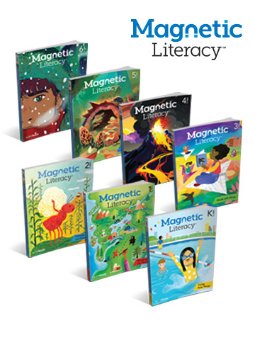
The Magnetic Literacy materials provide a comprehensive, research-based approach to literacy instruction that integrates systematic foundational skills development, knowledge building, comprehension, language development, writing, and research. The materials meet expectations for Gateway 1: Foundational Skills across Grades K–2, providing explicit, sequenced instruction in phonemic awareness, phonics, word recognition, word analysis, and fluency through consistent modeling, structured routines, cumulative practice, and regular assessments. Gateway 2: Knowledge Building with Texts, Vocabulary, and Tasks also meets expectations, with high-quality literary and informational texts organized into coherent THINK Sets around Essential Questions. Purposeful text sequencing, explicit comprehension and vocabulary instruction, text-based discussions, evidence-based writing, and research opportunities support students in developing knowledge and communicating their understanding. Formative and summative assessments, embedded scaffolds, and differentiated instructional resources provide ongoing opportunities to monitor learning and respond to student needs. In Gateway 3: Teacher & Student Supports, the materials meet expectations and provide comprehensive teacher supports, including detailed instructional guidance, planning resources, professional learning opportunities, standards correlations, and assessment tools. The materials also incorporate Universal Design for Learning, Cultural and Linguistic Responsiveness, and supports for Multilingual Learners, along with flexible grouping, assessment accommodations, and varied opportunities for students to demonstrate understanding. Print and digital resources feature a consistent organizational design that supports instructional planning and implementation. Across the gateways, areas for improvement include aspects of phonemic awareness progression and word-analysis instruction and assessment, more consistent guidance for addressing sensitive topics and building on others’ perspectives, greater flexibility in adapting instructional schedules, clearer guidance for advanced learners, increased opportunities for independent student monitoring, and more explicit support for technology-based collaboration. Overall, the materials provide a coherent and well-supported instructional program that promotes access to grade-level content and the development of foundational and increasingly sophisticated literacy skills, with some limitations in instructional progression, implementation flexibility, differentiation, and student-directed learning.